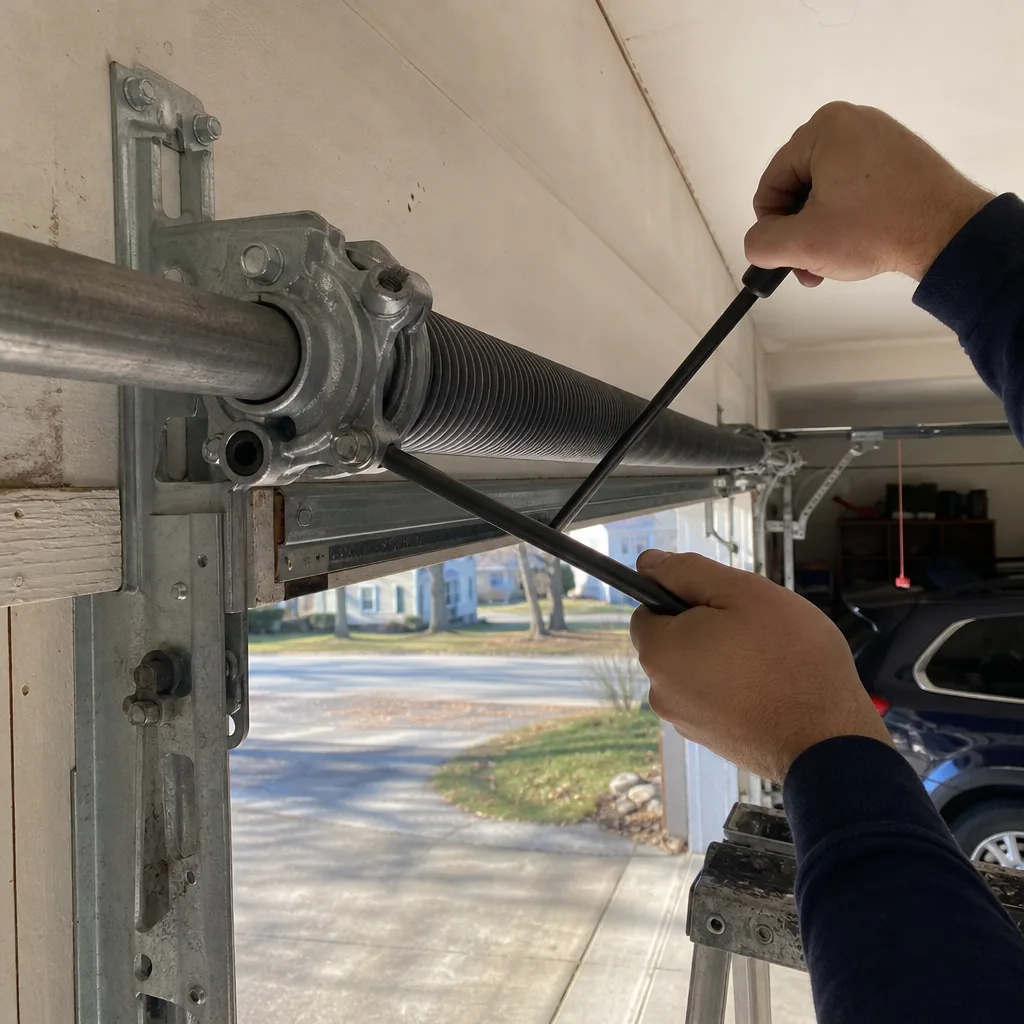
Last updated November 23, 2026
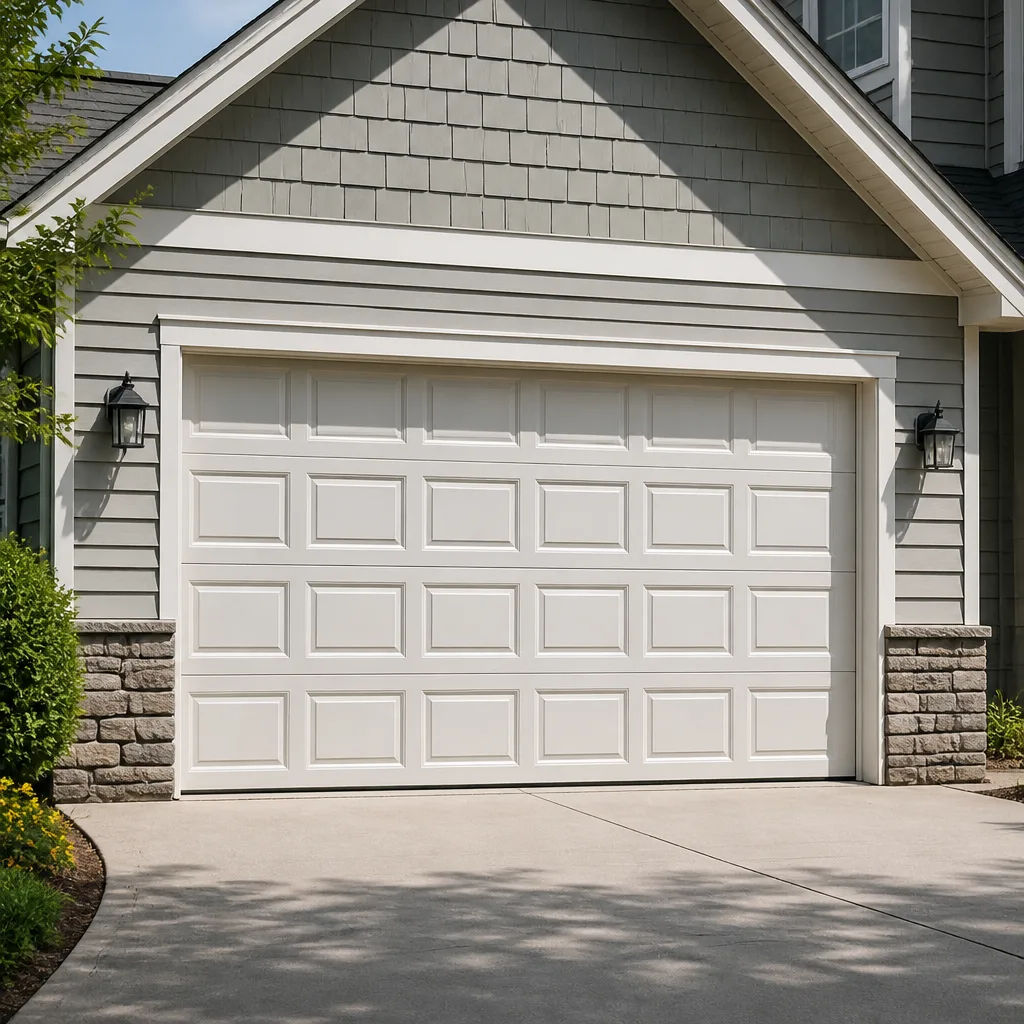 Raised-panel steel
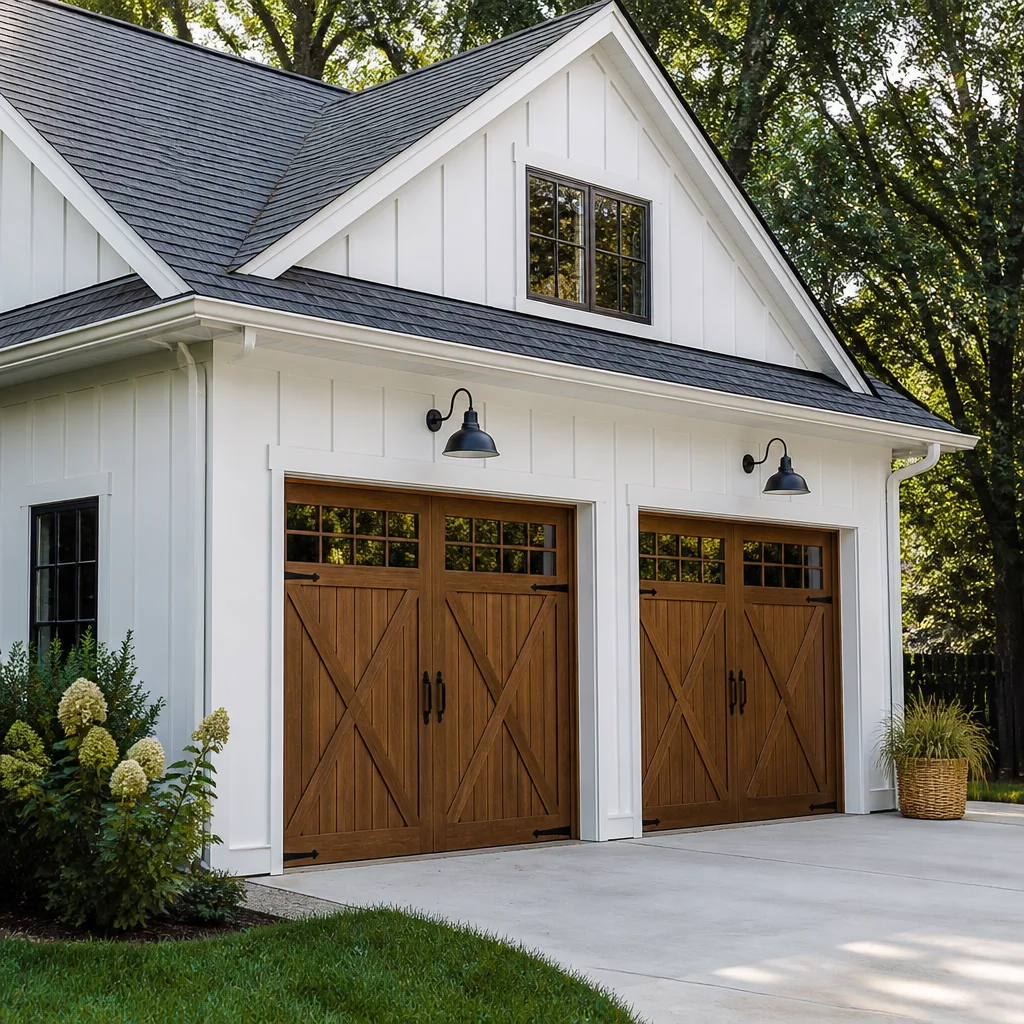 Carriage house
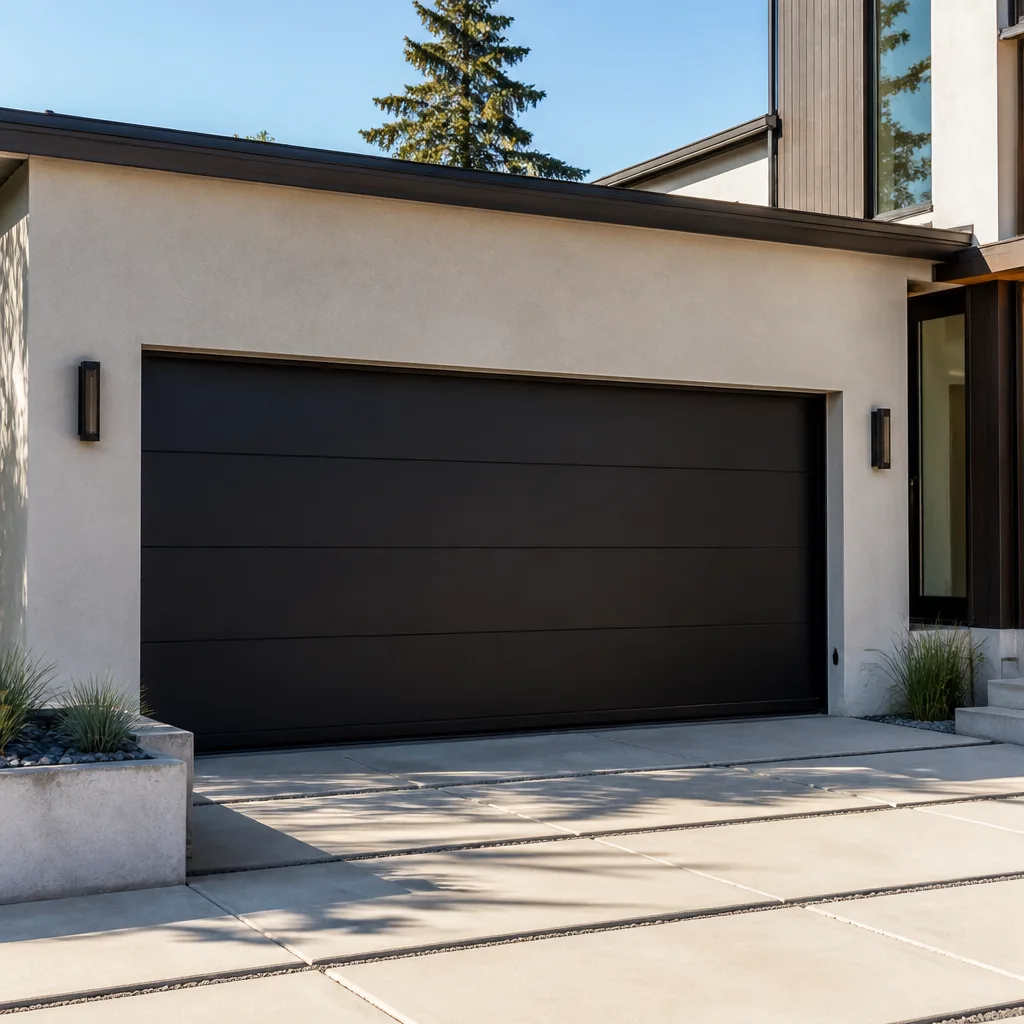 Modern flush
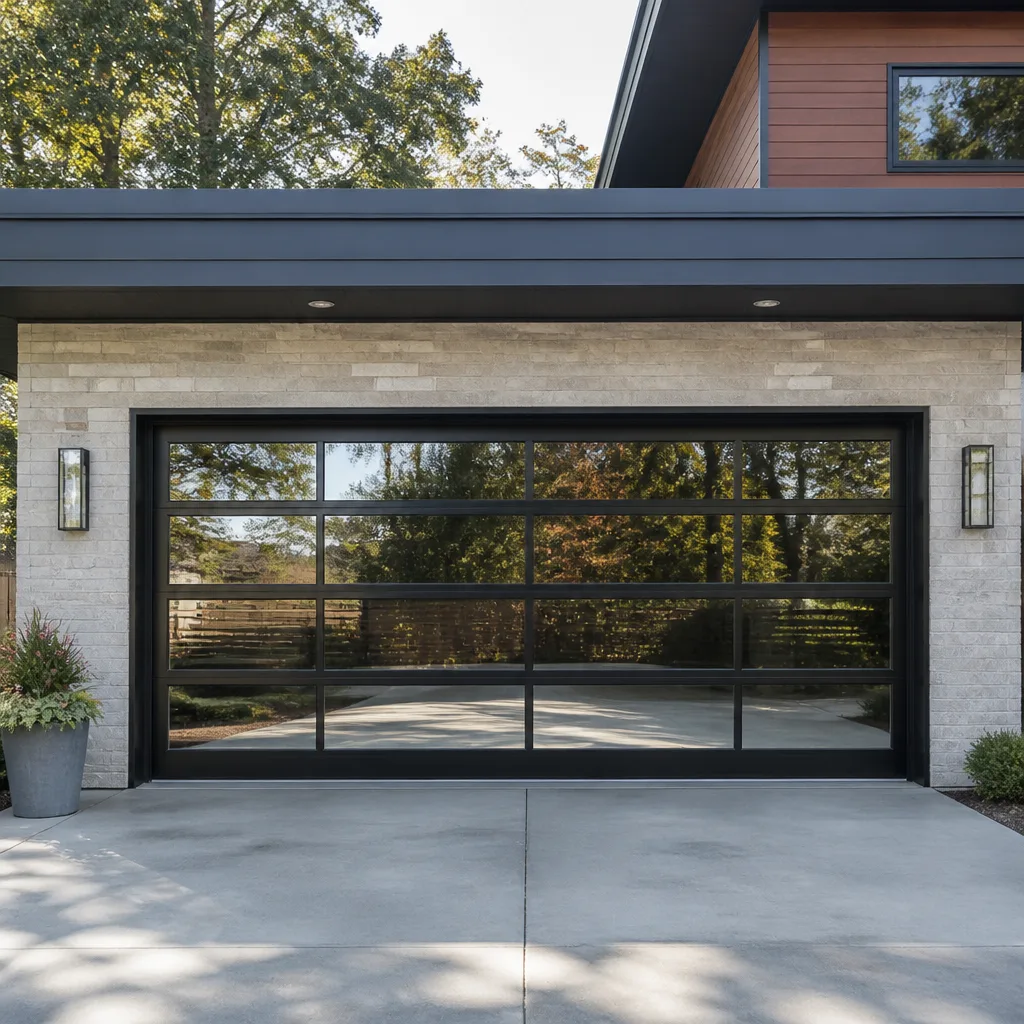 Full-view glass
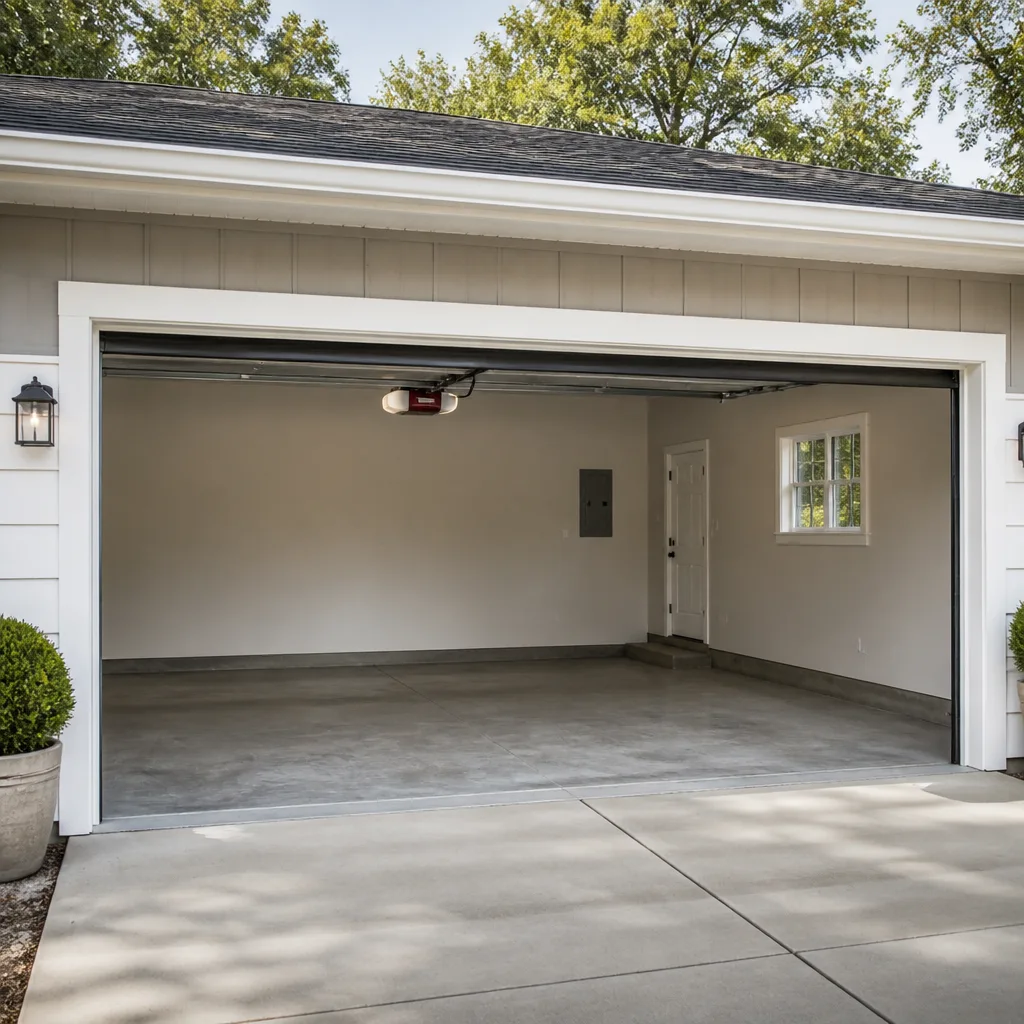 LiftMaster openers
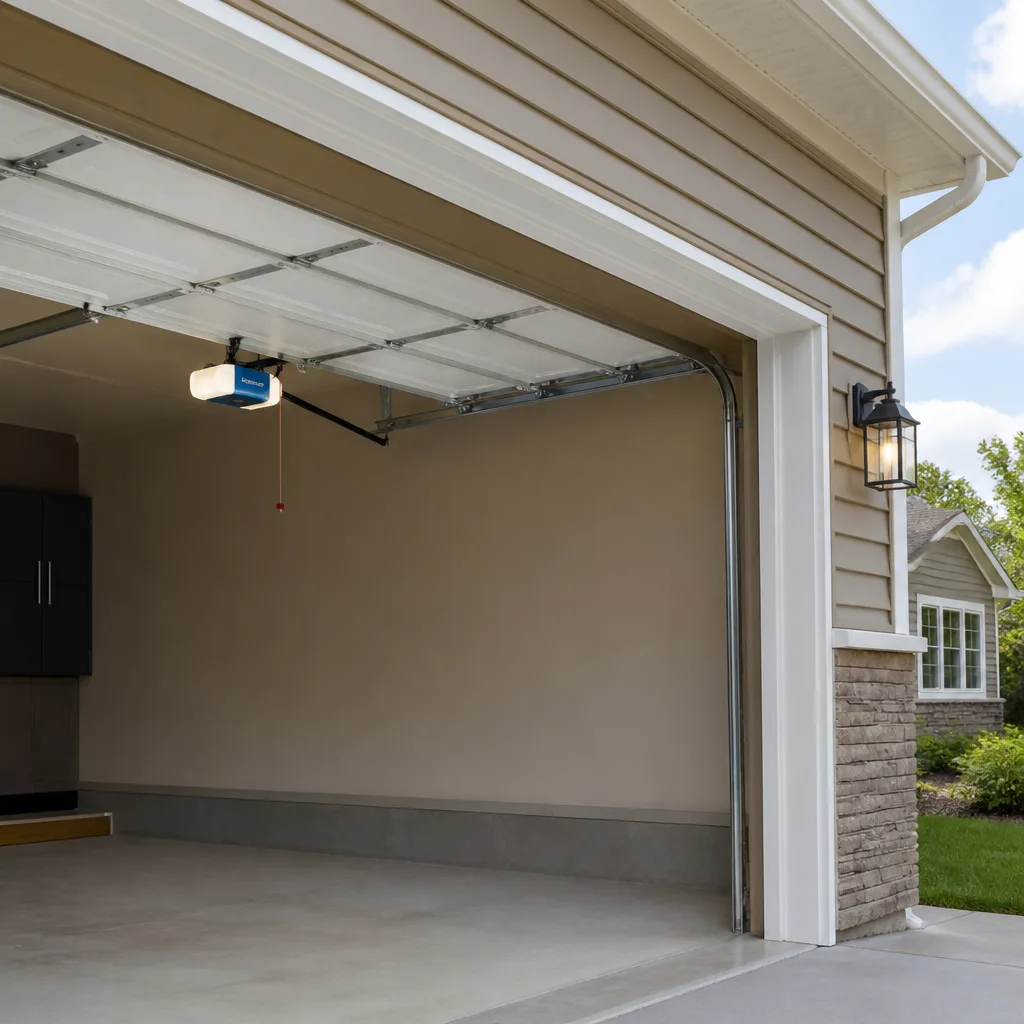 Chamberlain openers
Full 25-point door and opener safety check with every visit - springs, cables, rollers, tracks, and your LiftMaster or Chamberlain opener included
You get a price before we start. It does not change when the pro arrives.
Get your free estimateSeasonal Garage Door Care for Glen Burnie: Year-Round Homeowner’s Guide
The garage door failures that happen in January were usually caused by what the homeowner didn’t do in October. That’s the part most seasonal checklists get wrong. They tell you to “inspect your door each season” as if a glance in the driveway counts as maintenance. In Glen Burnie’s climate, seasonal prep is a chain. Late-season humidity, a sudden cold snap, and summer heat indexes above 100°F each stress a different part of the door, in a different way, in a different month. Miss one link and you pay for it three months later, usually on a morning when your car is trapped inside. This guide walks through each season as a distinct mechanical problem – not a calendar reminder – and covers the one task almost nobody does on schedule that measurably extends spring life.
Quick Answer
Seasonal garage door care in Glen Burnie means replacing weatherseal before the first hard freeze, rinsing road salt off the bottom brackets and rollers all winter, listening for torsion spring stress in early spring, checking track alignment as summer heat expands a south- or west-facing door, and greasing the torsion springs with high-temperature grease once a year. Each season attacks a different component, so each season needs its own task list.
Styles & brands we work with
- Raised-panel steel
- Carriage house
- Modern flush
- Full-view glass
- LiftMaster openers
- Chamberlain openers
Table of Contents
- Fall: The Last Window for Weatherseal
- Winter: Road Salt and the Bottom of Your Door
- Spring: Reading the Signs of a Stressed Spring
- Summer: Heat Expansion and Track Alignment
- The One Task Nobody Does: Spring Lubrication
- Your Glen Burnie Seasonal Checklist
- Brand Matters Less Than Fit
Fall: The Last Window for Weatherseal in Glen Burnie
Late October is the last practical window to replace a worn bottom weatherseal in Glen Burnie. After that, cold makes the rubber too brittle to compress properly, and a seal installed stiff never seats the way a warm-weather install does. This matters more than most people think. The bottom seal is the door’s only real barrier against drafts, water intrusion, and the small animals that treat a gap under the door as an open invitation.
Here’s what to look at before the cold settles in:
- Run your hand along the bottom edge. A seal that’s cracked, hardened, or missing chunks won’t seal against the floor no matter how well the door closes.
- Check the gap in daylight. With the door down, look for light coming under it. Any visible gap means the seal or the floor threshold isn’t doing its job.
- Look at the side seals and top seal too. The bottom gets all the attention, but side weatherstripping degrades just as fast and lets wind-driven rain in sideways.
- Check the door’s balance. Disconnect the opener (pull the release handle) and lift the door halfway by hand. A balanced door stays put. One that drifts down on its own is telling you the springs are already working harder than they should.
We work on the brand you already have, so whether your door is a Raynor or a LiftMaster-equipped model, the weatherseal questions are the same. If the seal is more than a few years old and feels like hard plastic rather than pliable rubber, replace it now. Doing it in October costs a fraction of what a frozen-and-cracked seal or a water-damaged threshold will run you come January.
Winter: Road Salt and the Bottom of Your Door
Road salt tracked into the garage on your tires is the quiet enemy of every door in Glen Burnie from December through March. Here’s the mechanism most people miss: salt doesn’t just corrode the metal it touches directly. It holds moisture against metal surfaces far longer than plain water does, so the bottom brackets, rollers, and hinges – the components closest to the floor and closest to the salt spray – rust faster from the inside of your garage than they ever would from outdoor exposure. A door that looks fine from the curb can have bottom brackets quietly dissolving a few inches above a salty concrete floor.
What to do through the winter:
- Rinse the lower hardware. A damp rag or a light rinse of the bottom brackets, hinges, and roller stems clears salt before it sits. Dry afterward. This is the single highest-value winter task.
- Keep the garage floor clear of standing meltwater. A squeegee or a quick sweep after a snowy drive keeps saltwater from pooling under the door.
- Watch for rusty roller stems. A roller that’s seized on its stem makes the door drag, which forces the opener and springs to work harder.
- Listen for new noises. A groan or squeal in cold weather that wasn’t there in summer usually points to dried-out or corroded hardware, not the opener.
Cold also stiffens every lubricant and seal on the door. Grease that flowed fine in July turns tacky in a Glen Burnie cold snap, which is why winter is the worst time to discover your door’s only maintenance was done in the wrong month. If the door won’t move at all on a cold morning, that’s an emergency call, not a project for the weekend – when your door won’t move, we do.
Spring: Reading the Signs of a Stressed Spring
A torsion spring that survived a Glen Burnie winter under stress often fails in the first warm weeks of spring, not in the cold. That timing catches people off guard. The spring didn’t break in the cold because the cold made it stronger; it broke in the thaw because the door had been cycling against a spring already weakened by months of temperature swings, and the first mild, heavy-use stretch pushed it over the edge. Early spring is when you want to actually look and listen, not just push the button and go.
What a stressed spring looks and sounds like:
- A visible gap in the coil. Look at the torsion spring above the door. A separation or a winding that looks uneven compared to the rest of the coil is a red flag.
- The door feels heavy by hand. Disconnect the opener and lift. A door that takes real effort, or that slams down instead of holding, has a spring that’s lost tension.
- Pops, snaps, or a bang from the ceiling. A snapped spring usually announces itself. If you heard it, stop using the door.
- The door runs unevenly or hangs at one side. A torsion system working unevenly shows up as a door that tilts as it rises.
- The opener strains to lift a door it handled easily last fall. The opener is often the messenger, not the cause.
Torsion springs are under extreme tension and are genuinely dangerous to touch. This is not a DIY component. A trained technician treats spring work as a safety-first job with the right winding bars and the door locked out, and that’s exactly why we treat garage door spring repair as a core service rather than an afterthought. If you suspect a stressed or broken spring, keep the door closed and call before you use it again.
Summer: Heat Expansion and Track Alignment
Summer heat in Glen Burnie pushes the metal of a south- or west-facing garage door through a real expansion-and-contraction cycle every single day. The door panel and the steel tracks both grow in the afternoon sun and shrink overnight. Over a season, that daily cycle is enough to shift track alignment, and a track that’s a fraction out of true turns into a binding problem. The door catches, the opener strains, and the rollers wear on one edge. Most homeowners blame the opener when the real culprit is a track that walked out of alignment in the heat.
What to check when the heat is on:
- Watch the door travel. Stand back and let it open and close. A door that shudders, jerks, or rubs on one side as it moves is telling you the track or the rollers are out of line.
- Look for shiny wear marks on the tracks. Bright scuffing on the inside of a track shows exactly where the rollers are binding.
- Check the gap between the door and the tracks. It should be even top to bottom and side to side. Uneven gaps mean the track has shifted.
- Keep the tracks clear. A little debris, a stray pebble, or a bent bracket from a bumped door is enough to start a binding problem that heat makes worse.
If your door faces south or west, it takes the worst of the afternoon heat, and it’s worth checking the tracks in July rather than waiting for a failure in August. A binding door that gets ignored wears out the opener motor and the rollers faster, and that’s when a simple track adjustment turns into an opener repair.
The One Task Nobody Does: Spring Lubrication
Lubricating the torsion springs once a year with the correct high-temperature grease is the single maintenance task that most reliably extends spring life, and almost nobody does it on schedule. Done consistently, proper spring lubrication can extend spring life by 2 to 3 years. That’s not a gimmick; it’s friction. A dry spring winds and unwinds against itself with more resistance every cycle, and that resistance is wear. The right grease cuts it.
The details matter, because the wrong product makes things worse:
- Use high-temperature grease, not light oil or WD-40. Thin oils evaporate or run off. A proper high-temp grease stays where it’s needed through a full Glen Burnie summer and winter.
- Apply it to the coils, not the door. The spring is the target. Over-greasing hinges or tracks attracts grit that grinds the rollers.
- Do it once a year, ideally in fall. A fall greasing protects the spring through the cold months when it’s most stressed.
- Never wind or unwind the spring to grease it. Apply grease to the spring as it sits. Adjusting tension is a technician’s job.
Springs, openers, panels, full replacements – one call covers it all, and a proper seasonal visit includes the greasing most people skip. If your springs are already noisy, binding, or visibly worn, schedule garage door repair rather than oiling a spring that’s past saving. If the spring is fine but the opener is the thing making noise, that’s a separate job, and garage door opener repair covers it. Our technicians have up to 9 years of experience, and we’ve learned that the springs people neglect are the ones that fail at the worst possible time.
Your Glen Burnie Seasonal Checklist
Here’s the full year at a glance, built around how Glen Burnie’s seasons actually behave rather than a generic four-season rotation. Each row is a task you can do yourself, plus the one that needs a technician.
Fall (late September into October)
- Replace the bottom, side, and top weatherseal before cold makes the rubber too brittle to install correctly.
- Test the door’s balance by hand with the opener disconnected.
- Grease the torsion springs with high-temp grease.
- Tighten any loose hinge or bracket bolts you can reach safely.
Winter (December through March)
- Rinse road salt off the bottom brackets, hinges, and roller stems after snowy drives.
- Keep the garage floor clear of standing meltwater.
- Watch for seized rollers and new cold-weather noises.
- Call for emergency service if the door won’t open or close.
Spring (March into April)
- Look for a gap or uneven winding in the torsion spring coil.
- Lift the door by hand to check for heaviness or a door that won’t hold.
- Listen for pops or snaps, and stop using the door if you hear one.
- Note any uneven travel or tilting and book a spring inspection.
Summer (June through August)
- Watch the door travel for shuddering, jerking, or rubbing.
- Check the tracks for shiny wear marks and uneven gaps.
- Keep the tracks clear of debris and check brackets for bends.
- Address binding early before it wears out the opener.
Brand Matters Less Than Fit
Homeowners in Glen Burnie ask us all the time whether one brand is “better” for the local climate. The honest answer is that fit, balance, and installation quality matter more than the badge on the door. A well-fitted door from any major manufacturer will outlast a poorly installed door from a premium brand. That said, brand fluency saves real time when something fails, because a technician who knows the product line diagnoses faster and sources the right part the first time instead of guessing.
We work on the brand you already have. Whether your opener is a LiftMaster, a Chamberlain, a Genie, or an older unit, and whether your door is a Clopay, Amarr, Wayne Dalton, Craftsman, or Raynor, the seasonal care principles in this guide apply the same way. The differences show up in the details: which opener models have smart-home compatibility, which door panels expand and contract differently in summer heat, and which springs wear at a predictable rate. Those details are why single-trade focus matters. We do garage doors only, so that’s the knowledge we carry.
If a repair turns into a replacement conversation, you shouldn’t have to find a second company. Diagnosis, repair, spring replacement, opener repair, and complete new-door installation all sit with the same specialist. When you’re ready, our Glen Burnie Garage Door Repair team handles the full job lifecycle, from a seasonal tune-up to a full door replacement.
Common Mistakes to Avoid
- Waiting until winter to replace weatherseal. Cold rubber won’t compress the way warm rubber does, so a seal installed in a Glen Burnie January never seats properly. Replace it in October, not when the drafts start.
- Letting road salt sit on the bottom hardware all season. Salt holds moisture against metal, so the parts closest to the floor corrode faster than anything else on the door. A quick rinse after snowy drives is the fix, and it’s cheap.
- Greasing the springs with light oil or a spray lubricant. Thin oils evaporate or run off and leave the spring dry, so the coils wear faster. High-temp grease is the right product, applied to the coils once a year.
- Ignoring a track that shifted in the summer heat. A south- or west-facing door expands daily in July, and a track that walks out of alignment turns into a binding problem that wears out the opener. Check the tracks when it’s hot, not when the door quits.
- Using a door with a stressed or broken spring. Torsion springs are under extreme tension and can cause serious injury. If you hear a snap or the door won’t lift by hand, stop using it and call a trained technician.
- Assuming the opener is always the problem. A straining opener is often the messenger for a spring, track, or roller issue. Diagnosing the door first saves you money on a motor you didn’t need.
- Skipping spring greasing because it “seems fine.” A quiet spring isn’t a healthy spring. The greasing that extends spring life by 2 to 3 years is exactly the task most homeowners never do on schedule.
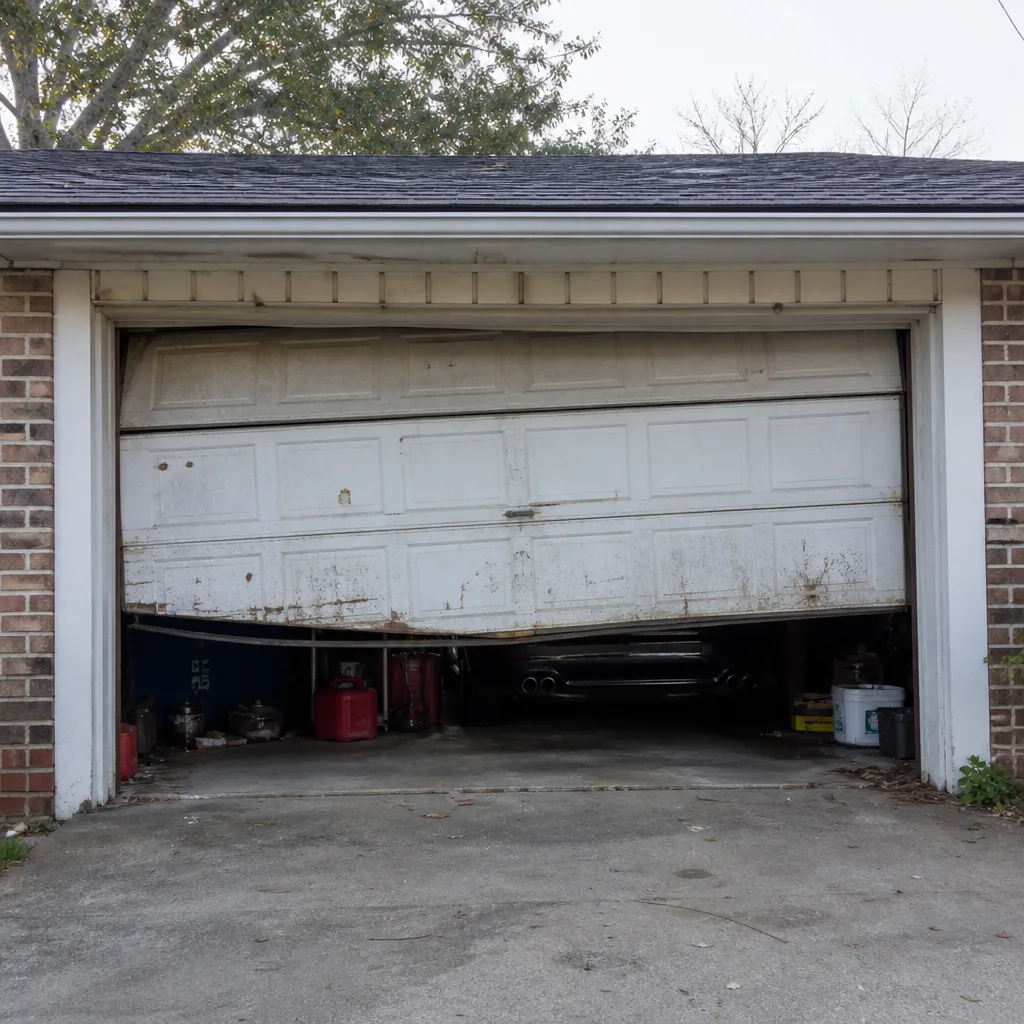
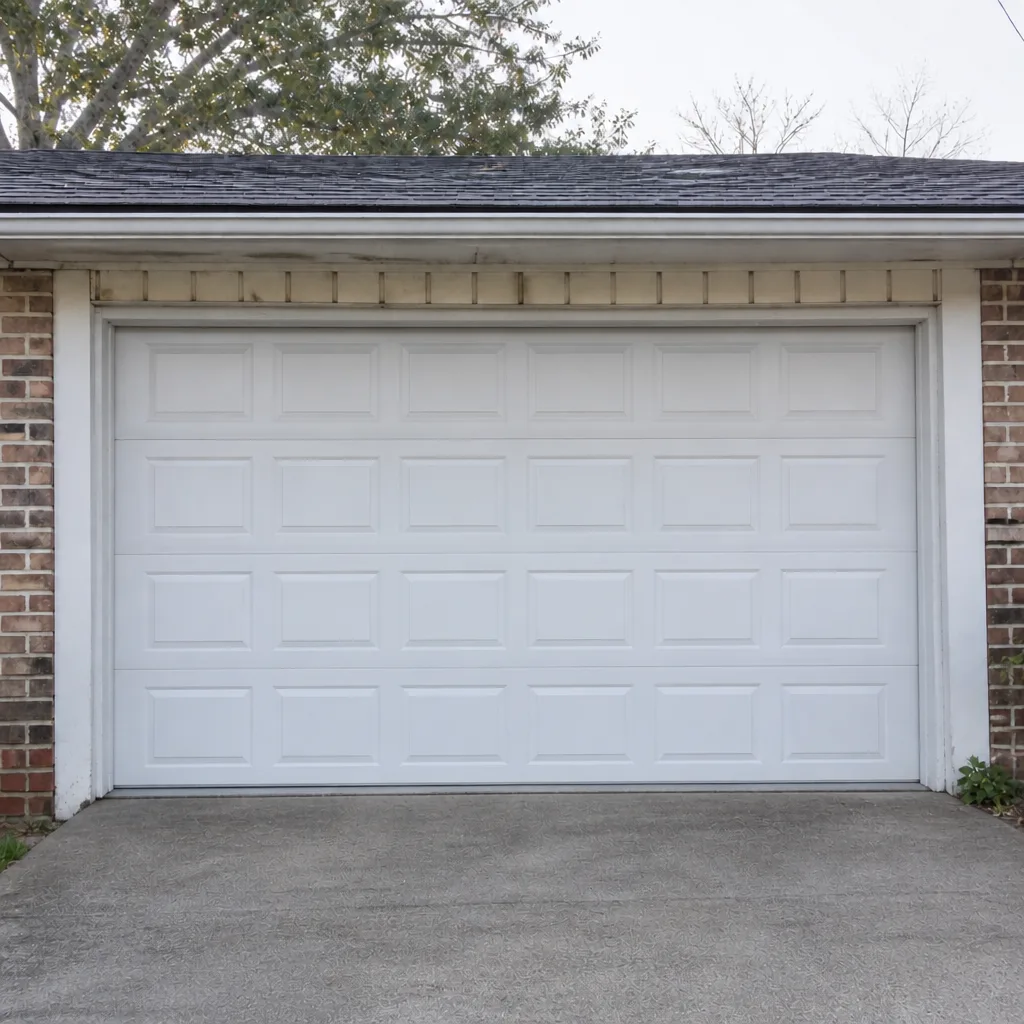
See the difference
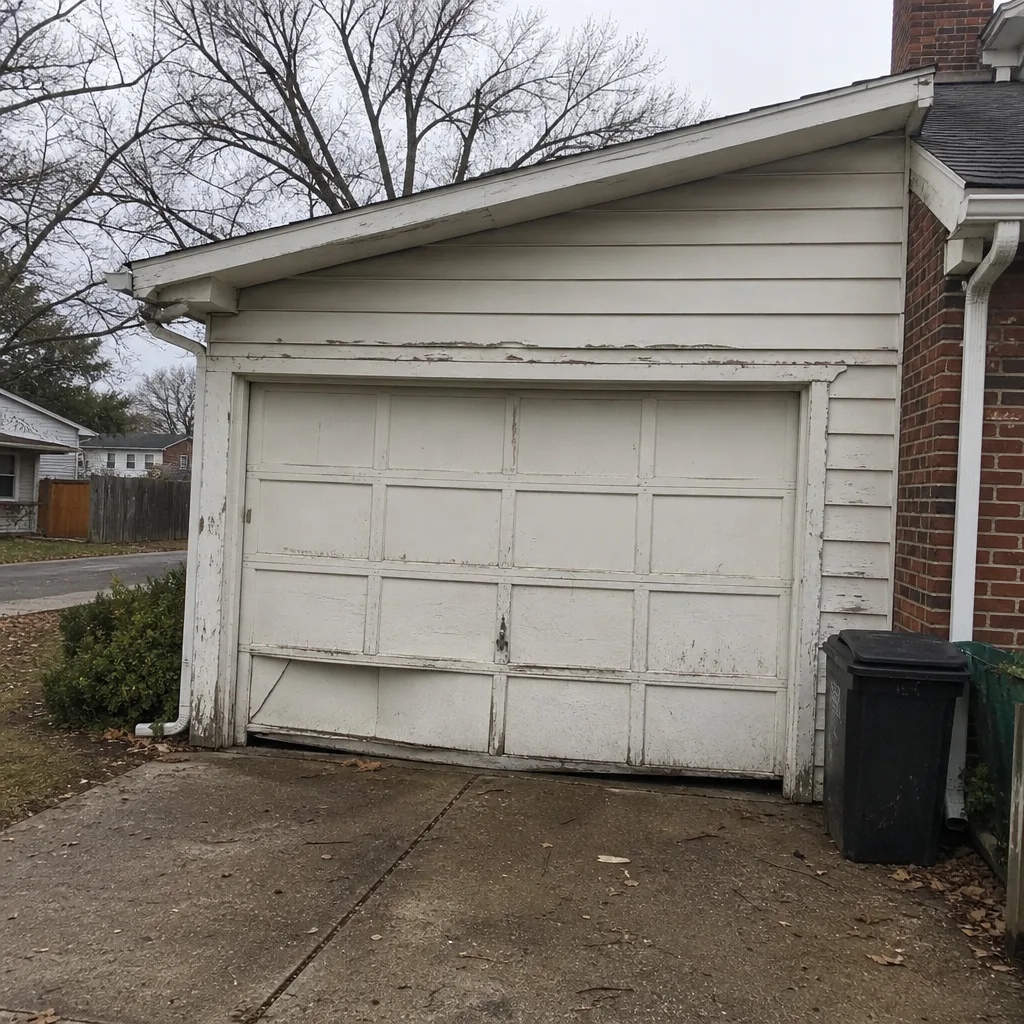 Before
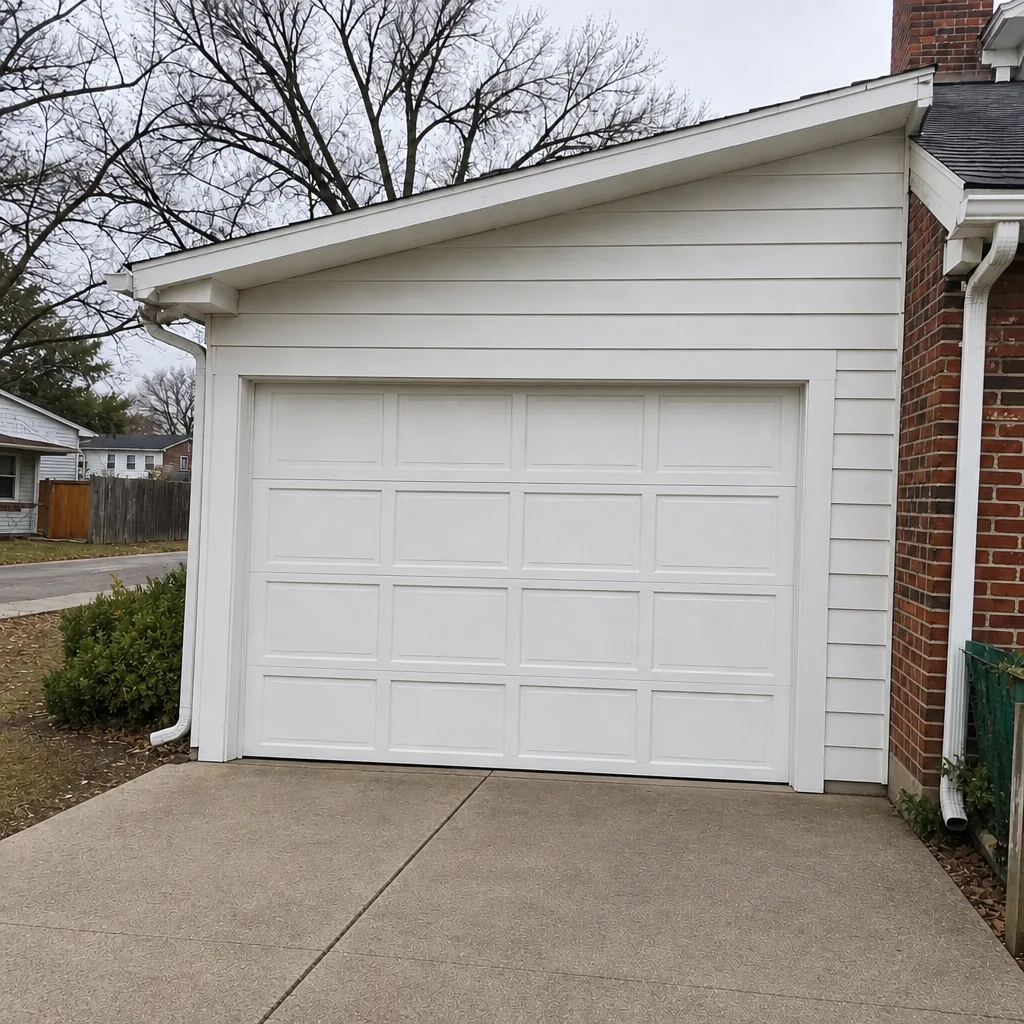 After
 Before
 After
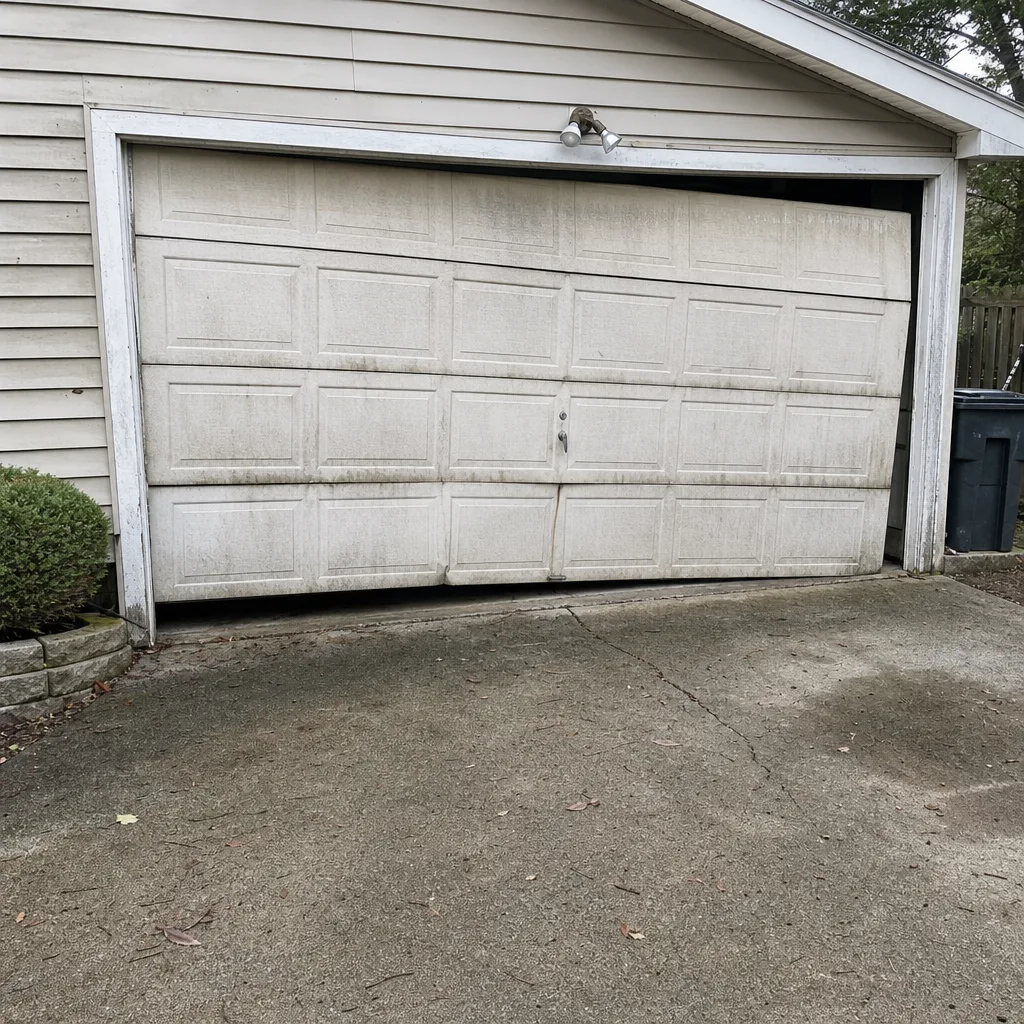 Before
 After
When to Call a Professional
Some seasonal care is safe to do yourself: rinsing salt off the lower hardware, greasing the springs, sweeping the tracks, and checking the door’s balance by hand. But a few situations call for a trained technician, every time. If the door won’t open or close, or the spring has visibly snapped, keep the door closed and call. If the door tilts, shudders, or hangs on one side, the tracks or springs are out of alignment and need a proper diagnosis. If you heard a loud bang from above the door, a spring let go. And if the opener strains to lift a door it used to handle easily, the door needs a trained look before the motor burns out. Glen Burnie Garage Door Repair offers free estimates in Glen Burnie – call (877) 820-9449. We handle emergency garage door service, so when your door won’t move, we do.
Frequently Asked Questions
Replacing worn weatherseal in late October, before cold makes the rubber too brittle to compress properly. A seal that fails after the freeze lets in drafts and water all winter, and the repair is far more involved than doing it in the fall. If your seal feels like hard plastic rather than pliable rubber, it’s due.
Once a year with high-temperature grease, ideally in the fall before the cold months. Done consistently, proper spring lubrication can extend spring life by 2 to 3 years. Light oil and spray lubricants aren’t a substitute – they run off and leave the coils dry, which accelerates wear.
Heat expansion. A south- or west-facing door in Glen Burnie grows in the afternoon sun and shrinks overnight, and that daily cycle can shift track alignment over a season. A binding track makes the door shudder or rub on one side, and if you ignore it, the opener and rollers wear out faster.
No. Torsion springs are under extreme tension and are genuinely dangerous to touch, and release accidents can cause serious injury. A trained technician uses the right winding bars and locks the door out first. If you suspect a broken or stressed spring, keep the door closed and schedule garage door spring repair with a professional.
Yes, and faster than most people expect. Salt tracked in on tires holds moisture against metal, so bottom brackets, hinges, and roller stems rust faster from inside the garage than they would from outdoor exposure. Rinsing and drying the lower hardware after snowy drives is the simplest way to slow it down.
It’s an emergency. A door that’s come off its tracks can fall, and forcing the opener to run it can cause more damage or injury. Stop using the door and call for same-day help. Glen Burnie Garage Door Repair offers emergency garage door service for exactly this situation – call (877) 820-9449 and we’ll get a technician out as fast as we can.
The Bottom Line
Seasonal garage door care in Glen Burnie works as a chain, not a checklist. Replace weatherseal in October before the cold makes it brittle. Rinse road salt through the winter. Read your spring for stress in early spring before it fails under load. Check track alignment in the July heat before a binding problem wears out your opener. And grease the springs with high-temp grease once a year, because that’s the task that quietly extends spring life by 2 to 3 years and almost nobody does it on schedule. Miss a link and you pay for it three months later. Keep the chain intact and your door runs quietly through every season.
Get Your Free Estimate
If seasonal care has turned into a repair, or you’re ready for a full replacement conversation, we’re here to help. Glen Burnie Garage Door Repair works on the brand you already have, from LiftMaster and Chamberlain openers to Raynor and Genie systems, and we cover everything from spring repair to complete new-door installation. Call (877) 820-9449 for a free estimate. Pricing is agreed before any work starts, and we treat spring work as the safety-critical job it is. Get it fixed today, not scheduled for next week.
Written by the team at Glen Burnie Garage Door Repair.