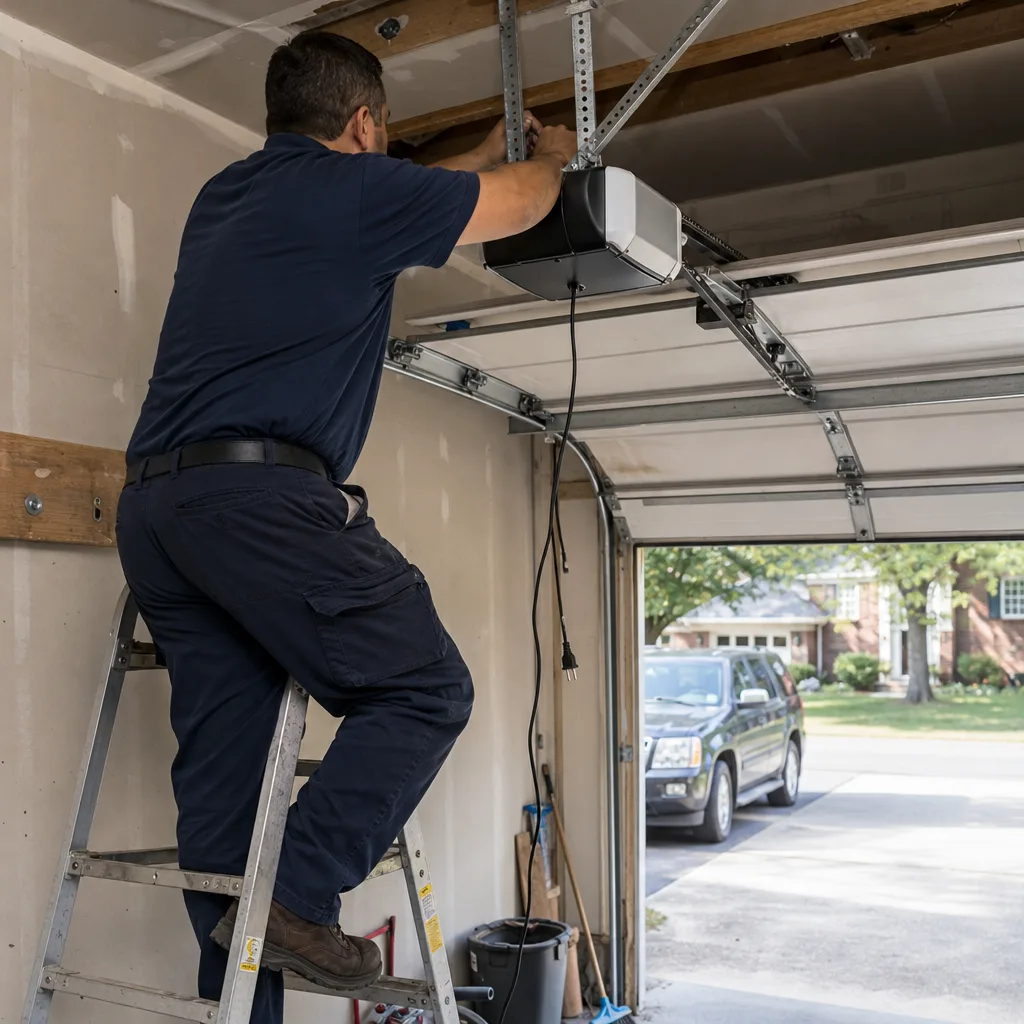
Last updated November 23, 2026
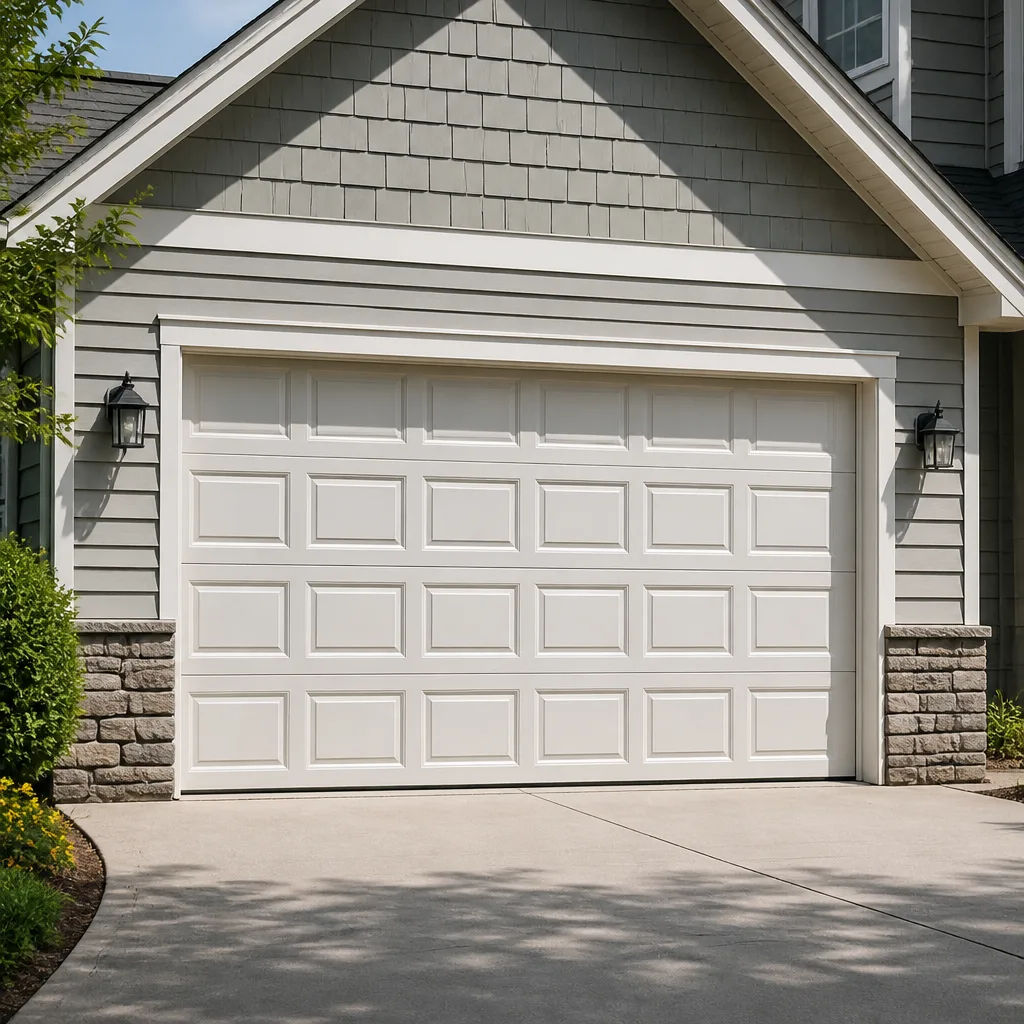 Raised-panel steel
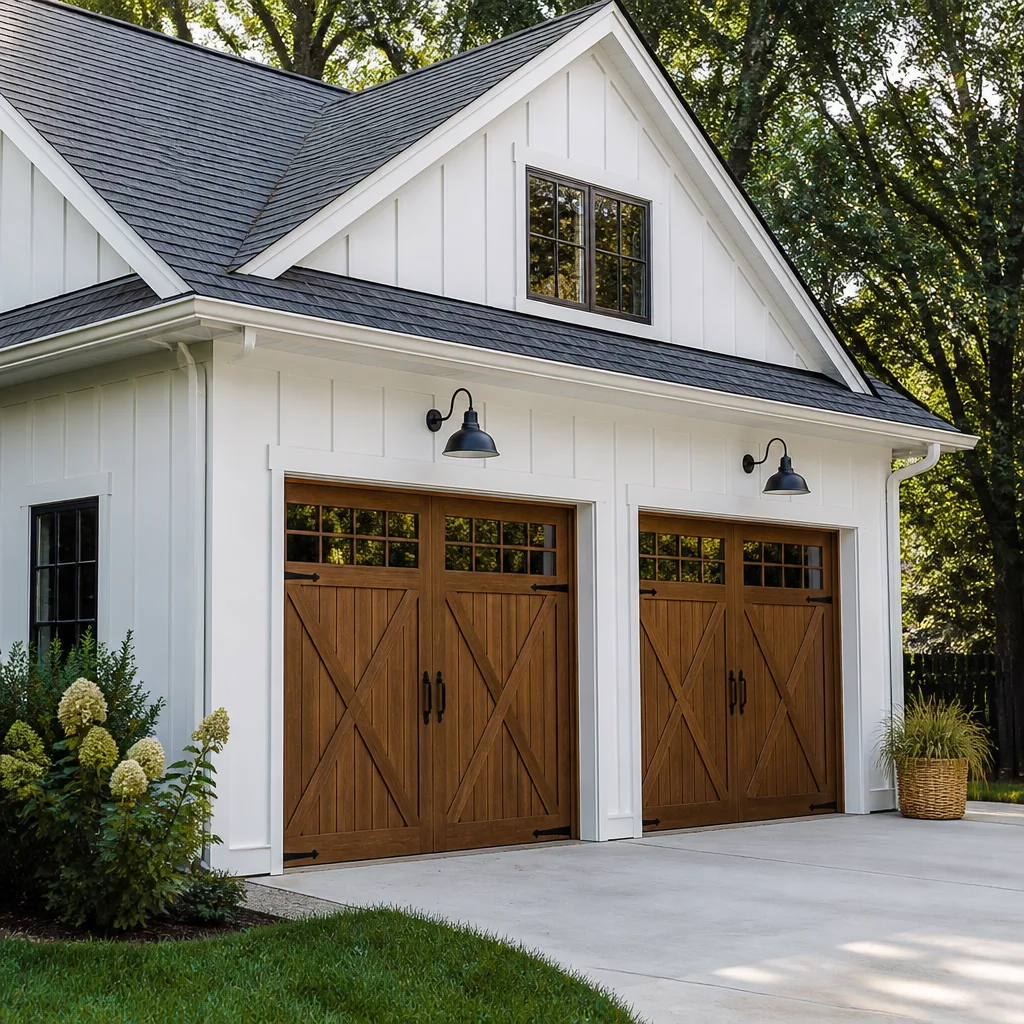 Carriage house
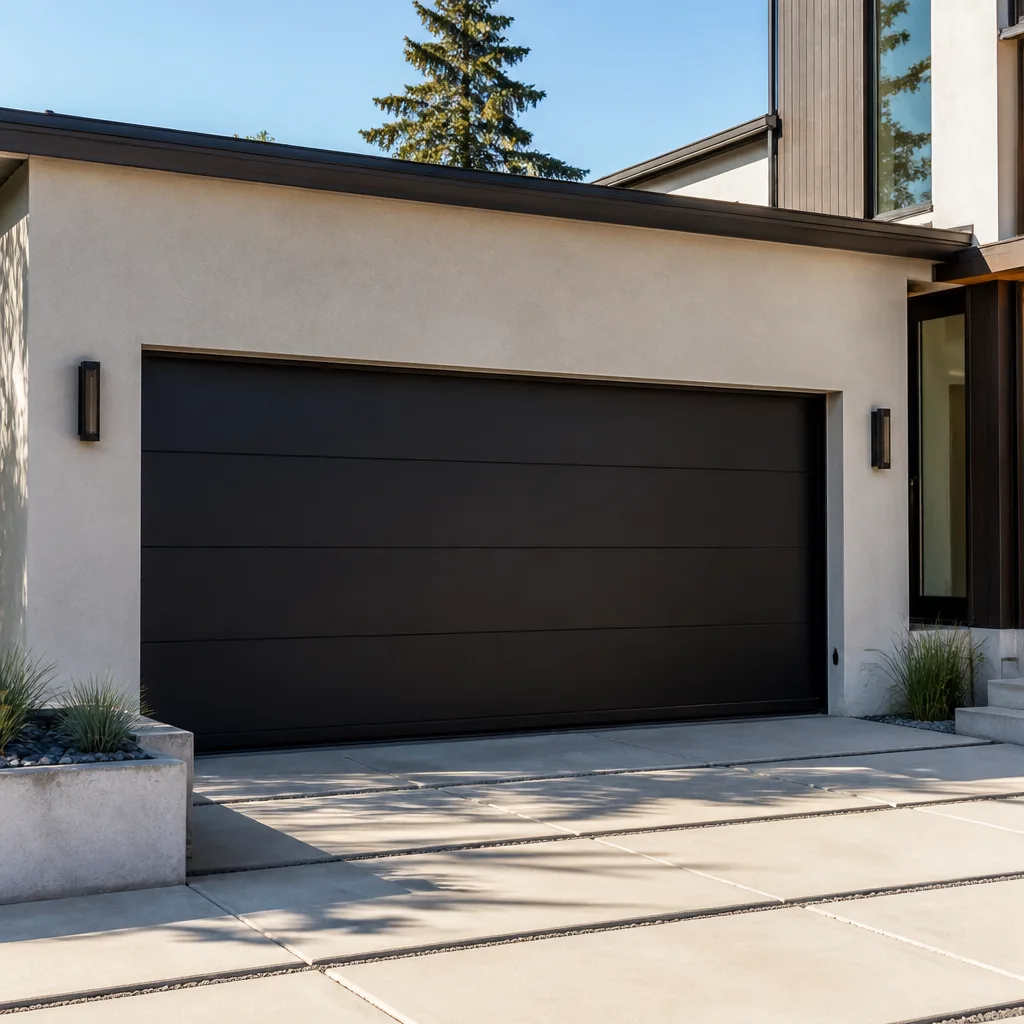 Modern flush
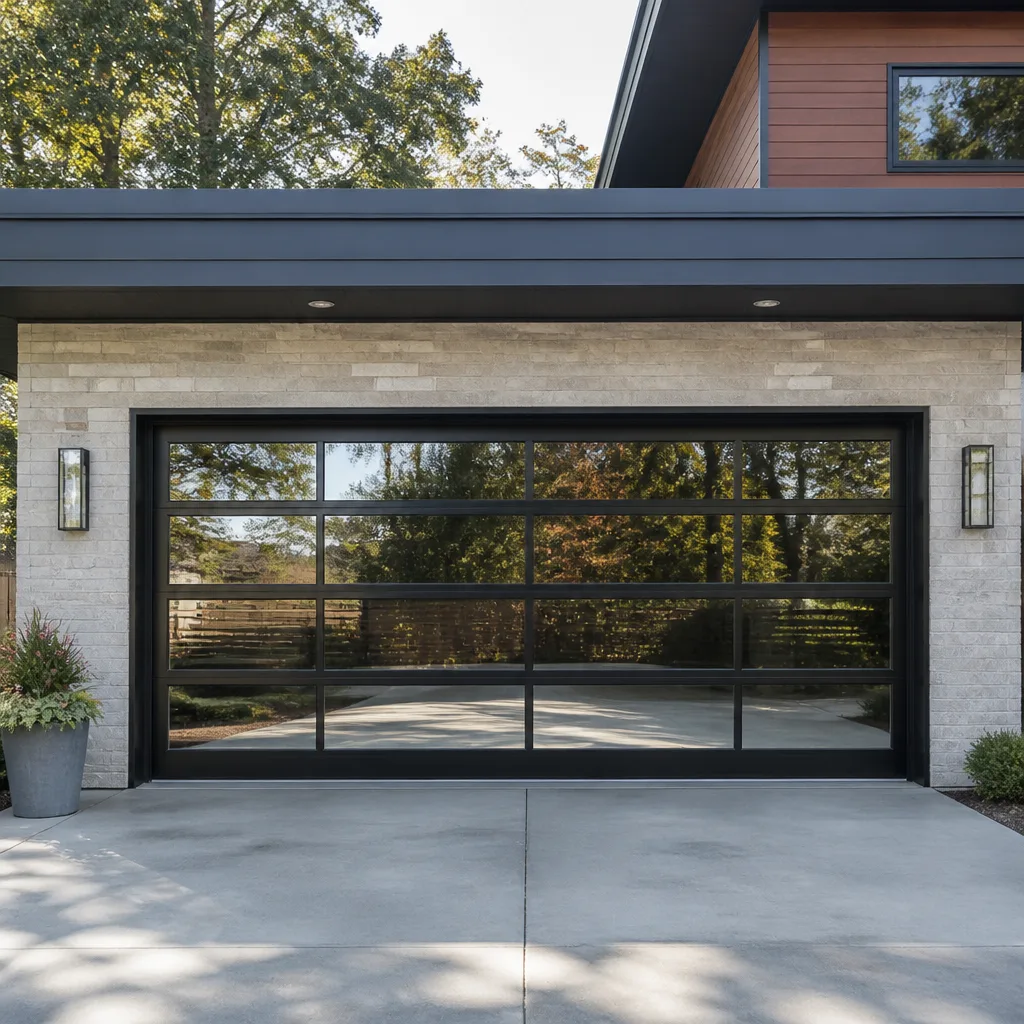 Full-view glass
 LiftMaster openers
 Chamberlain openers
Full 25-point door and opener safety check with every visit - springs, cables, rollers, tracks, and your LiftMaster or Chamberlain opener included
You get a price before we start. It does not change when the pro arrives.
Get your free estimateGarage Door Warning Signs: A Glen Burnie Homeowner’s Reference Guide
Most garage doors don’t fail out of nowhere. They warn you first – in a grind, a squeal, a door that slows down on one side, a panel that shudders before it drops. The problem is that homeowners in Glen Burnie hear these signals every day and learn to tune them out. “It’s just the garage door being old” is the most expensive sentence in this trade, because the noise that gets ignored for six months is usually the one that turns a small part replacement into a full spring and opener job. This guide decodes what your door is actually telling you, matches each sound and sight to the component most likely failing, and tells you plainly whether you have days or months before something gives.
Quick Answer
A garage door shows warning signs in three ways: sound (grinding, squealing, banging, clicking, humming), sight (frayed cables, separated springs, bent tracks, loose hinges), and speed (a door that lifts unevenly, jerks, or reverses without cause). Any grinding, any exposed spring gap, or any door that won’t stay level means stop using it today and get it looked at. Squeaks, slow starts, and the occasional click are usually monitor-and-plan signals. When you can’t tell the difference, the safe move in Glen Burnie is a same-day diagnostic call to (877) 820-9449.
Styles & brands we work with
- Raised-panel steel
- Carriage house
- Modern flush
- Full-view glass
- LiftMaster openers
- Chamberlain openers
Table of Contents
- The Sound-to-Cause Matrix: What Each Noise Means
- Stop-Using-It-Today Signs: The Cable, Spring, and Track Red Flags
- Speed and Balance Indicators: A Door That Tells You It’s Out of Whack
- Opener Warning Signs vs. Door Warning Signs
- Monitor It or Stop Using It? Clear Criteria
- How Glen Burnie Conditions Stress a Garage Door
- Brand-Specific Clues: LiftMaster, Chamberlain, Genie, and Raynor
- Your 10-Minute Monthly Inspection Routine
The Sound-to-Cause Matrix: What Each Noise Means
Every garage door noise comes from friction, impact, or vibration in a specific part. Once you know which part produces which sound, a grinding noise stops being “the door being old” and becomes “a worn roller or a track that’s out of alignment.” That distinction is the difference between a quick fix and a bigger repair. Here’s how the common sounds map to components:
- Grinding, especially during the last few inches of travel: Worn steel rollers dragging in the track, or a track that’s bent or misaligned. Most likely a roller or track issue. Grinding that gets louder as the door closes usually points to the bottom rollers or the vertical track. If you hear metal-on-metal right as the door seats, the door may be hitting the floor harder than it should.
- Squealing or high-pitched whining: Dry or worn hinges, rollers, or torsion parts. A squeal is friction that hasn’t yet become damage. Lubrication helps short term, but a persistent squeal after greasing usually means a roller is failing internally.
- Banging or loud pops: Loose hinge plates, worn bushings, or a torsion spring that’s starting to unwind unevenly. A single sharp bang at the start or end of travel is often a loose hinge or a spring that’s lost tension.
- Clicking that repeats: A worn gear in the opener’s drive, or a photo-eye or safety sensor getting bumped. Clicking tied to opener travel is often a gear or logic issue, not a door issue.
- Buzzing or humming with no movement: The opener motor is receiving power but the drive isn’t engaging. On a chain- or belt-drive opener this often means a stripped gear, a broken belt, or a logic board fault. Humming is almost always an opener problem, not a door problem.
In Glen Burnie we see the grinding-at-the-bottom pattern most in doors on older housing stock where the original rollers have never been replaced. Rollers are cheap parts, but the track damage caused by a worn roller is what turns a roller job into a track and panel job. If your door grinds and you’ve never had the rollers looked at, that’s the place to start. A proper tune-up and roller check from our team is the fastest way to sort out which noise belongs to which part – our technicians have up to 9 years of experience with every major brand.
Stop-Using-It-Today Signs: The Cable, Spring, and Track Red Flags
Some warning signs are not “watch this” – they are “stop operating the door immediately.” The three that demand a shutdown are frayed or kinked cables, a torsion spring that’s visibly broken or separated, and a track that’s bent enough to pull the door out of alignment. Springs and cables carry the full weight of the door under extreme tension, and a failure there can send a door down hard or send a cable whipping. This is where you call a professional and leave the door alone until someone qualified has looked at it.
Here’s how to tell the difference between monitor and stop:
- Cable fraying: A healthy lift cable is smooth and tightly wound. If you can see broken strands, a birdcage-like fray, or a kink that won’t straighten, stop using the door. Cables are under load even at rest.
- Spring separation: Look at the torsion spring above the door. A visible gap in the coils, a spring that’s clearly snapped, or a door that’s suddenly much heavier to lift by hand all mean a broken spring. Do not try to lift the door and definitely do not try to fix a spring. A torsion spring failure is the single most dangerous repair in this trade.
- Bent track threshold: A small dent is cosmetic. A track that’s bent or buckled enough that the door no longer rolls smoothly in it, or a vertical track that’s pulled away from the wall, is a stop sign. Running the door on a bent track can bend panels and put the door off its rollers.
If you’re standing in your Glen Burnie garage looking at a broken spring or a frayed cable, don’t run the door to “test it.” Call us at (877) 820-9449 and we’ll get someone out to look at it – we treat this as emergency work, not a next-week appointment. If the spring is fine but you want a trained eye to confirm your cables and track are healthy, that’s exactly the kind of check our garage door spring repair visit covers.
Speed and Balance Indicators: A Door That Tells You It’s Out of Whack
A garage door should rise and fall at a steady, even pace. When one side lifts faster than the other, or the door shudders at a certain height, it’s telling you the two sides of the door are no longer sharing the load equally. That imbalance almost always traces to a stretched or broken spring on one side, a worn roller or hinge, a bent track on one side, or a torsion bar that’s no longer level. In a two-spring setup, one spring failing while its partner still works is one of the most common causes of a door that lifts crooked – and it’s a sign that the door is now being held up by a single spring doing double duty.
Balance issues show up in a few ways:
- The door visibly tilts – one corner higher than the other as it rises.
- The door binds or jerks at a specific point in its travel, often the same height every time.
- The door drops too fast or slams harder than usual when closing.
- You can’t hold the door open by hand – it wants to fall.
You can check balance without doing any repair work: raise the door by hand to about waist height and let it go. A well-balanced door holds its position. A door that drops immediately or shoots up on its own has a balance problem, and that problem is almost always springs or cables. Don’t test this on a door that already shows a broken spring, a frayed cable, or obvious track damage. If your door fails the balance test, that’s the point to call in a professional rather than keep working it – and a balance check is exactly the kind of thing our garage door repair visits include.
Opener Warning Signs vs. Door Warning Signs
Homeowners blend door problems and opener problems into one bucket, which is a mistake because they get diagnosed and fixed differently. Door problems (springs, cables, tracks, panels, hinges, rollers) show up as physical noises and movement issues. Opener problems (motor, gear, logic board, sensor, remote) show up as the opener not doing its job even when the door itself is fine. The fastest way to tell which one you have is to disconnect the opener and try moving the door by hand. If the door moves freely by hand, the door is fine and your opener is the issue. If the door fights you, the door is the issue and the opener is being blamed unfairly.
Opener-specific warning signs look like this:
- Motor vs. logic board: A failing motor usually gets louder and hotter, sometimes smells like burnt wiring, and often fails during a lift rather than a start. A failing logic board usually shows up as the opener refusing to respond, lights flashing in a pattern, the door reversing for no reason, or the remote and wall buttons both quitting at once. Logic board problems often come with no noise at all – the opener just stops.
- Reversing or stopping for no reason: Usually a safety sensor issue, a logic board, or a force-travel setting that’s drifted. On a LiftMaster or Chamberlain opener with a learn button, this often maps to a sensor alignment or a limit switch issue.
- Openers with smart-home features: Chamberlain and Genie both make app-connected openers. Those are more sensitive to logic board faults and to sensor misalignment, and they tend to report errors in the app before they fail in person.
In Glen Burnie, our technicians work on LiftMaster, Chamberlain, Genie, Craftsman, Raynor, Clopay, Amarr, and Wayne Dalton, which means we don’t guess at which opener you have. That matters because a Genie with a stripped gear and a LiftMaster with a dead logic board need different fixes. If your opener is the problem, look at garage door opener repair – and if the motor is dead entirely, we can replace the unit too, so you’re not dealing with two different companies.
Monitor It or Stop Using It? Clear Criteria
Not every warning sign is urgent, but the ones that are urgent are urgent. The practical rule we give homeowners is this: if the sign involves tension, load-bearing parts, or the door coming off its rails, stop. If it involves friction, wear, or minor noise that hasn’t changed the door’s movement, monitor it and schedule service before it progresses. Here’s a plain comparison:
- Stop using the door now: visible spring gap or snapped spring, frayed or kinked lift cable, door off its track or hanging, a door that reverses immediately on closing, a door that won’t stay level when opened by hand, or metal-on-metal grinding that wasn’t there before. Each of these is a mechanical failure in progress.
- Monitor and schedule service: a new or persistent squeal, a single click at the end of travel, slow starts, a door that’s gotten noticeably noisier over weeks, one side that lifts slightly higher than the other but not enough to bind, or a remote that sometimes doesn’t respond. These are wear-and-tear signals that can often be handled with a tune-up before they cascade.
The distinction matters most in Glen Burnie because of how often we see monitoring turn into a bigger repair. A squeal that gets greased every year but never gets a proper inspection is a hinge or roller failing slowly in a way that eventually scores its track. A door that lifts one inch higher on one side is a spring doing more than its share, and that single spring failing on its own schedule is how driveway damage happens. The rule of thumb: if the door’s movement has changed, treat it as a stop sign. If only the noise has changed, monitor it and get it looked at soon.
How Glen Burnie Conditions Stress a Garage Door
Glen Burnie’s weather gives garage doors a specific set of stresses. The area gets humid summers, occasional heavy rain and thunderstorms, and winter cold that swings back and forth across freezing. That pattern matters because metal expands and contracts with temperature, and torsion springs, tracks, and hinges are all metal under constant load. A door that’s slightly out of balance in mild weather can become noticeably out of balance in a cold snap or during a humid stretch. The humidity also works on hinges and rollers, encouraging surface rust and drying out factory lubrication faster than a dry climate would.
What that means for Glen Burnie homeowners:
- A door that suddenly sticks or sounds different in winter is often reacting to cold-driven contraction, not a new failure. Don’t force it – cycle it once slowly and listen.
- Humidity stiffens old hinges and rollers. A door that’s been fine all spring may start to squeal in July without any new damage.
- Thunderstorm season means doors can get wind-loaded and forced past their limits. If your door took a hit or was forced by wind, inspect the track and hinges before running it.
- Older doors in established Glen Burnie neighborhoods often have original single-spring torsion setups or extension spring systems that have been in place far longer than they should be. If you’re not sure how old your springs are, that’s a question worth asking a professional.
Because we work in Glen Burnie and the surrounding area, we see these patterns up close. Our team runs a full range of services – repairs, spring replacement, opener work, and full new-door installation – so if a warning sign turns into a replacement conversation, you don’t need to call anyone else. Garage doors are all we do, and a same-day diagnostic visit is as quick as a phone call to (877) 820-9449.
Brand-Specific Clues: LiftMaster, Chamberlain, Genie, and Raynor
Different brands fail in different ways, and knowing your brand can narrow down what a given noise or symptom is likely to mean. Here’s what we see most often across the brands we work on in Glen Burnie:
- LiftMaster: Common warning signs are gear wear in the drive and logic board faults on units with learn-button programming. LiftMaster openers often fail during a lift rather than a start, and their error patterns tend to show up as light flashes or the door reversing on its own.
- Chamberlain: Chamberlain and LiftMaster share a lot of design lineage, so the failure patterns overlap. Smart-home-connected Chamberlain models often report sensor misalignment in the app before it shows up as a door that reverses. A Chamberlain that clicks and then stops is usually a gear or logic issue.
- Genie: Genie openers commonly show stripped drive gears and worn belts. If your Genie hums but doesn’t move, start with the drive and gear before assuming the motor is dead.
- Raynor: Raynor doors and openers tend to hold up well, but the tension systems and hinges on older Raynor doors are the parts we end up replacing most. A Raynor door that grinds at the bottom is usually a roller or track issue, not a panel issue.
We work on the brand you already have, and we stock the diagnosis knowledge for it. That means a Raynor door with a grinding bottom roller and a Chamberlain with a failing logic board don’t get the same generic answer – they get the right one, the first time. If you’re not sure what brand you have, check the opener head or the sticker on the door, and if you can’t find it, a call to (877) 820-9449 can put a trained technician on the task.
Your 10-Minute Monthly Inspection Routine
A monthly inspection catches most of the warning signs before they become failures. None of these steps put you in contact with springs or cables – that’s not DIY territory, and a torsion spring failure can cause serious injury. Stick to the visual and functional checks below, and call us for anything that requires touching tension parts. Here’s the routine we recommend:
- Look at the springs from the side. Don’t touch the torsion bar. Check for a visible gap in the coils or a spring that’s clearly snapped. If you see either, stop and call.
- Eye the cables. Check the lift cables on each side of the door for fraying, kinks, or broken strands. Healthy cables look smooth and evenly wound.
- Test balance by hand – only if the door looks healthy. Raise the door to about waist height and let it go. It should hold position. A door that drops or shoots up has a balance problem.
- Listen for new noise. Cycle the door once and listen. Grinding, squealing, and banging each point to a specific component. A sound that’s new this month is more important than a sound that’s been there for a year.
- Watch the door’s speed and line. Look at whether the door lifts level on both sides. A door that tilts or jerks has a load-sharing issue.
- Check the track. Look for dents, bends, or a vertical track pulling away from the wall. A bent track is a stop sign.
- Test the safety reverse. Put an object in the door’s path and confirm it reverses. If the door doesn’t reverse, stop using it until a professional checks the sensors and force settings.
- Check hinges and rollers. Look for loose hinge screws and worn or cracked rollers. These are the parts that usually announce failure through squeals and clicks.
The routine takes about ten minutes and catches most of what turns into a pricey repair. If a step makes you nervous, especially the spring and cable checks, that’s the right instinct – call a professional rather than poke at tension parts. If you’d rather have a trained set of eyes do the whole inspection, our team can handle it and give you a written assessment of what’s fine now and what’s likely to need service soon.
Common Mistakes to Avoid
- Greasing a noise instead of diagnosing it. Lubrication quiets a squeak, but if the underlying cause is a worn roller or a failing hinge, greasing just delays the failure. Get the noise traced to its component before treating it.
- Running a door with a broken spring “just to get the car out.” A door with a broken spring is being carried by the opener and whatever’s left of the balance system, and forcing it can damage the door, the opener, or both. Leave it and call.
- Ignoring a door that lifts higher on one side. Many Glen Burnie homeowners assume a slight tilt is just the door being old. In a two-spring setup, a tilt usually means one spring is doing all the work – and it’s the one that will fail next.
- Assuming a dead opener means a new opener. Dead motors, dead logic boards, sensor issues, and stripped gears all look like “the opener died,” but they get very different repairs. A proper diagnostic catches the difference before you replace a unit that didn’t need it.
- Blaming the door for an opener problem. If the door moves fine by hand and the opener still fails, don’t replace door parts. The problem is in the opener.
- Skipping a monthly check. The warning signs that get ignored are the ones that cause the emergency calls. A ten-minute routine between service visits is what keeps a small repair from becoming a full replacement.
- Running the door on a bent track. A bent track not only damages rollers and panels but can also put the door off its rails. A bent track is a stop sign, not a “deal with it later” sign.
The common thread in all of these is that Glen Burnie doors fail predictably when their warning signs are ignored. The signs don’t disappear; they get worse on their own schedule. The cheapest repair is almost always the one done before the warning sign turns into a failure.
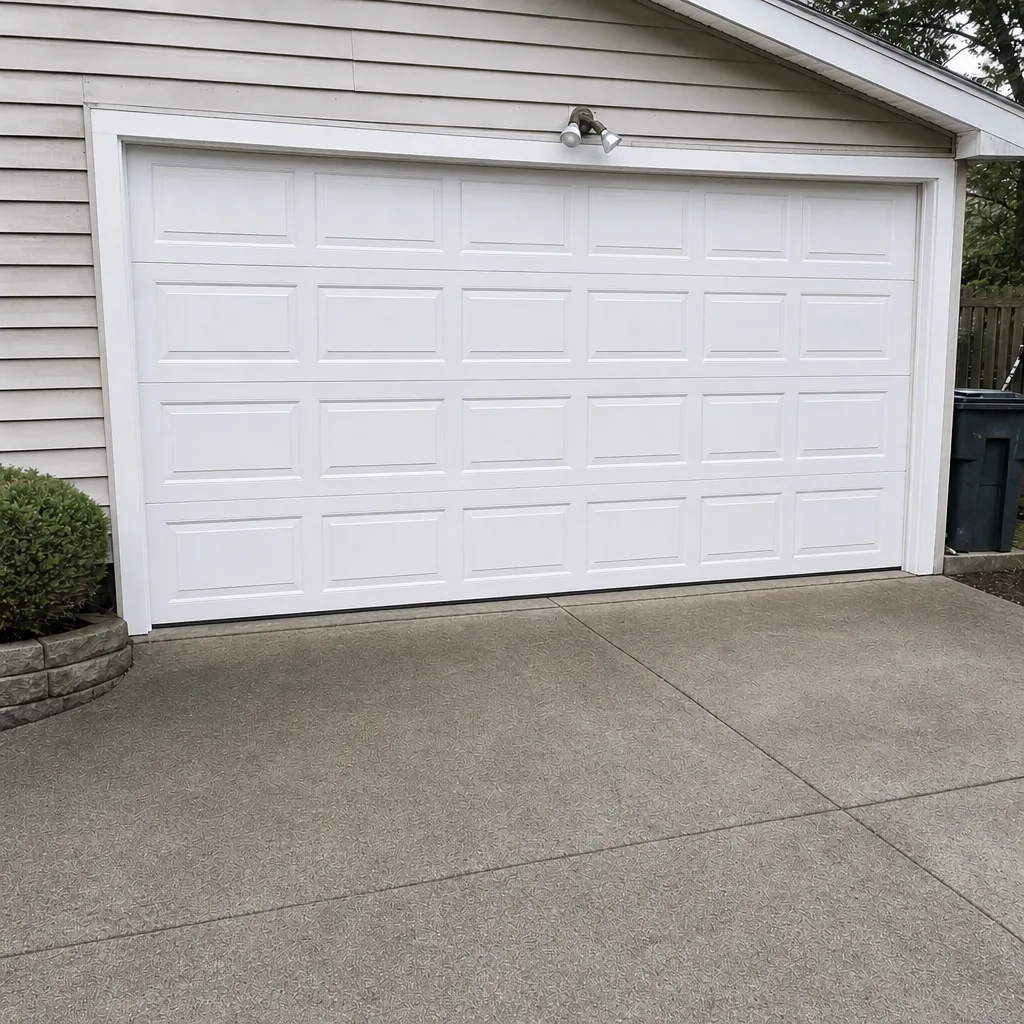
See the difference
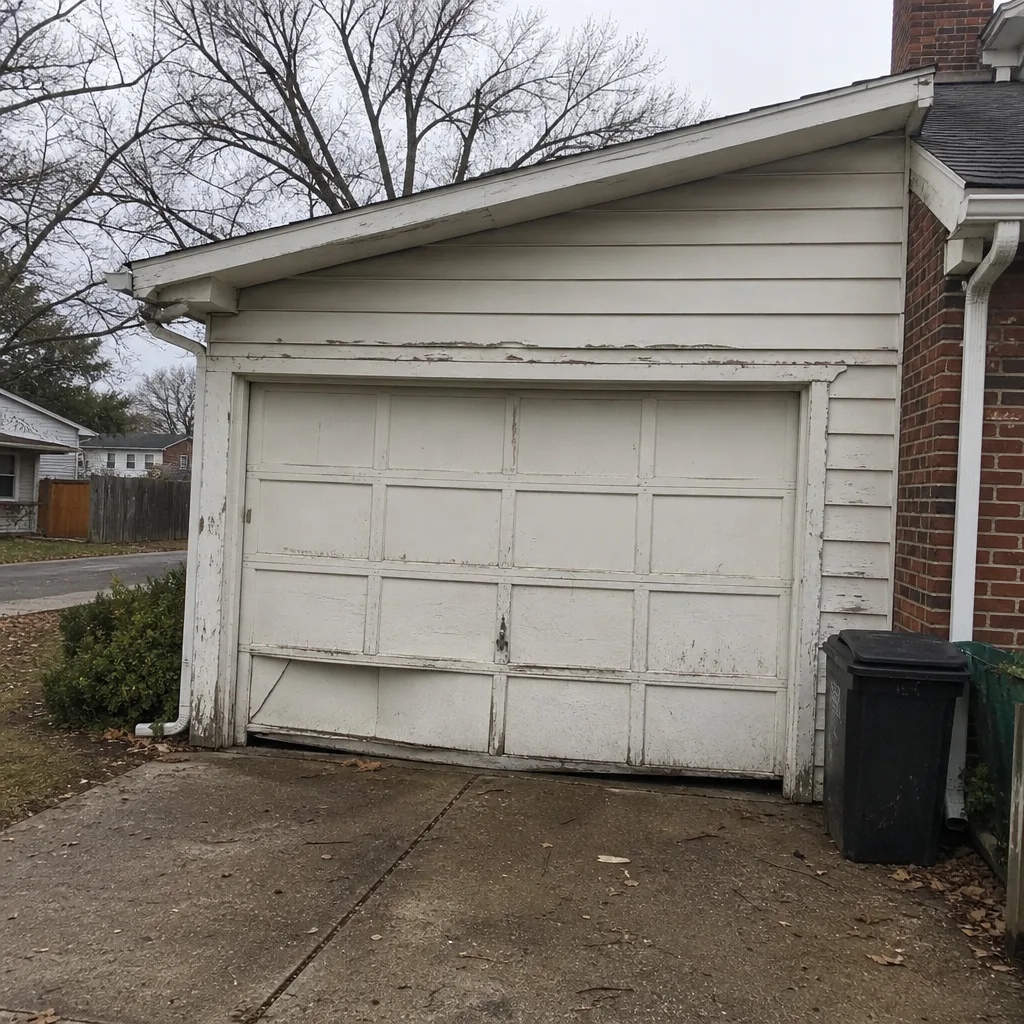 Before
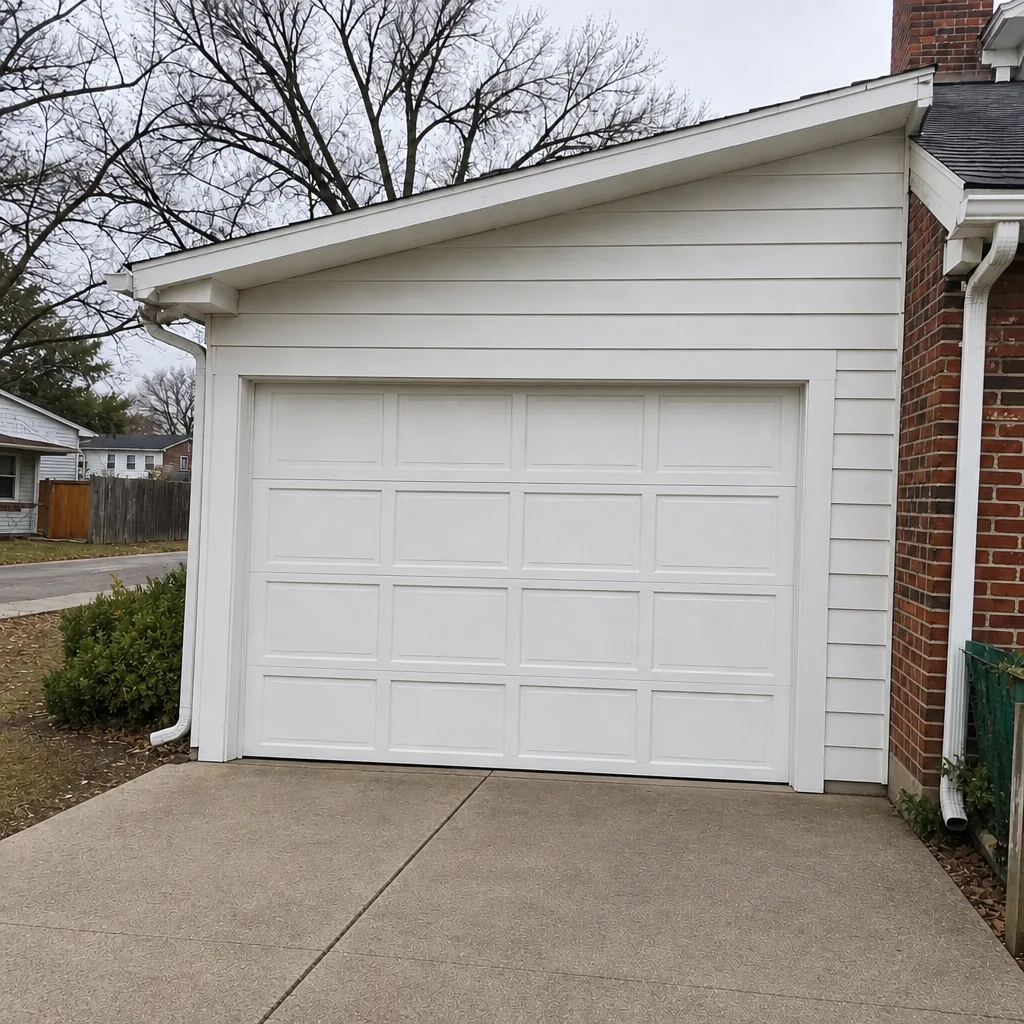 After
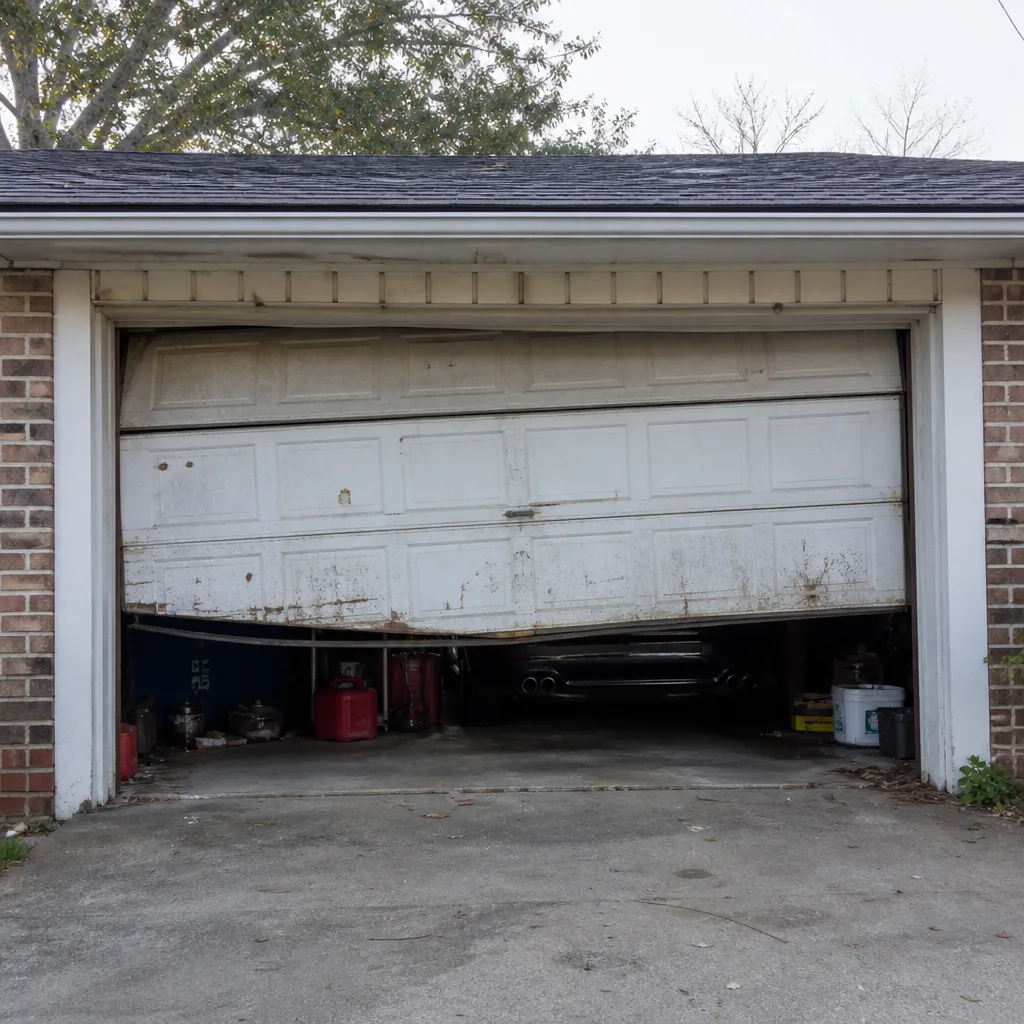 Before
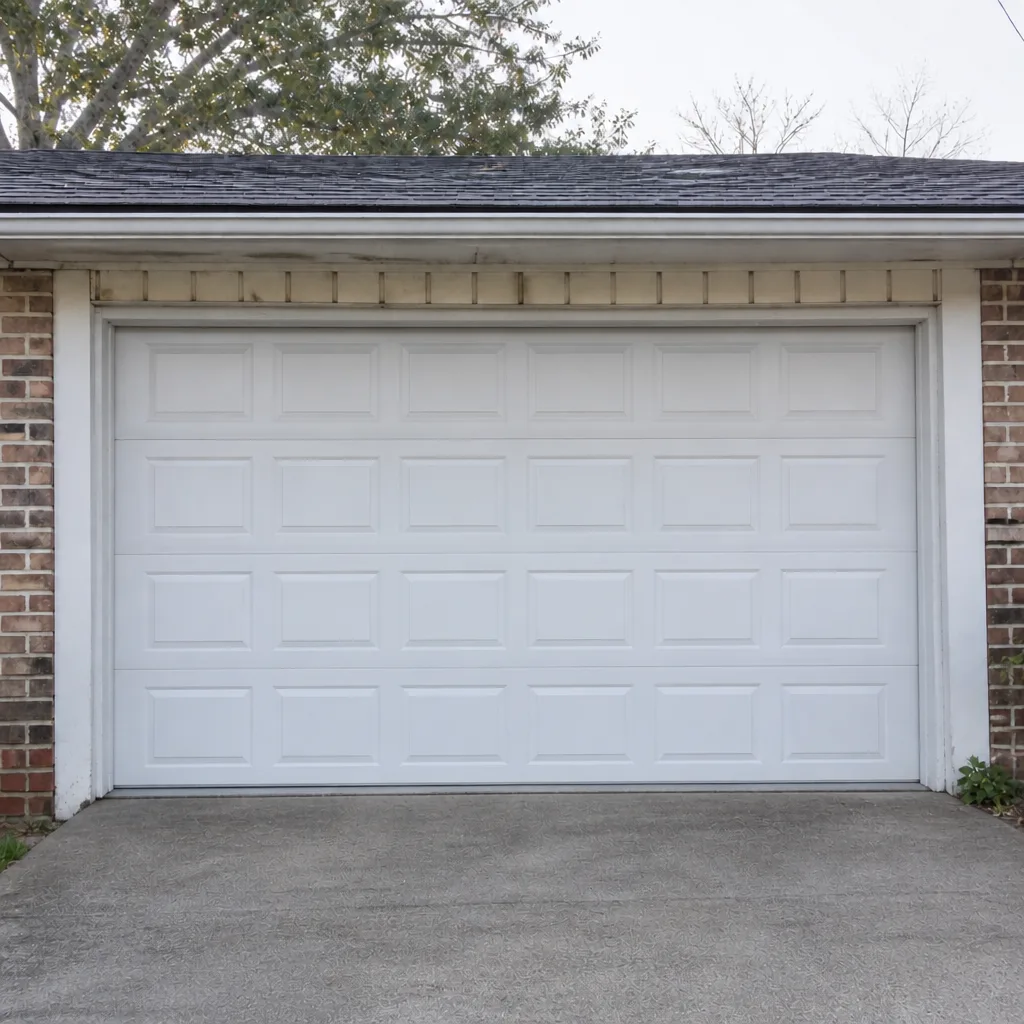 After
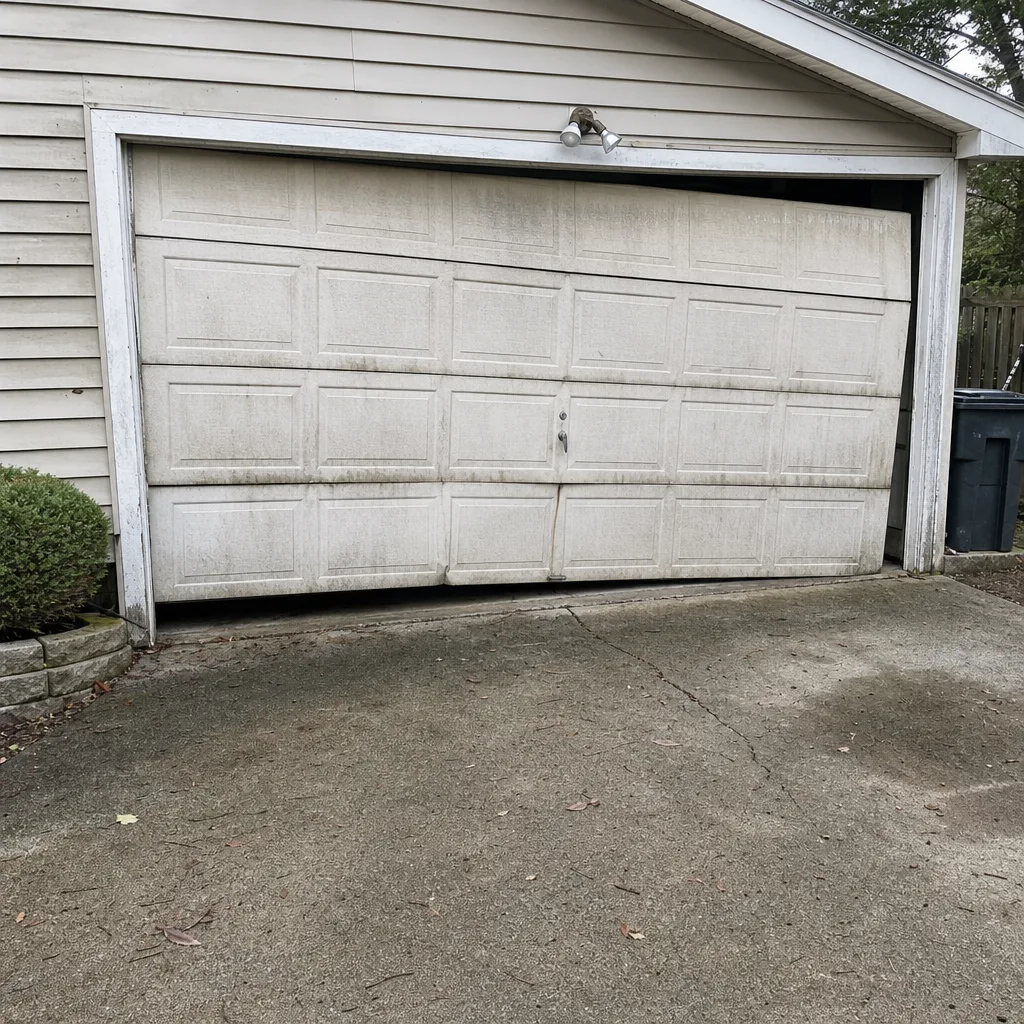 Before
 After
When to Call a Professional
Call a professional the moment a warning sign involves a spring, a cable, a track, or a door that won’t stay level. Those are the load-bearing, high-tension parts of the system, and they’re not something to troubleshoot on your own. Also call if your door has developed a grinding noise that wasn’t there a month ago, if your opener reverses for no reason, if the safety reverse isn’t working, or if your door has been slowly getting harder to open. In Glen Burnie, our technicians have up to 9 years of experience across every major brand, and we offer emergency service because a dead door at 7 a.m. is a real problem, not a scheduling inconvenience. Glen Burnie Garage Door Repair offers free estimates in Glen Burnie – call (877) 820-9449.
Frequently Asked Questions
The most common warning sign is grinding or squealing during the last few inches of travel, and it usually points to a worn roller or a track that’s out of alignment. A grinding sound that’s new this month is a stronger signal than a squeak that’s been there for years, because it means something has changed. If your Glen Burnie door grinds, call (877) 820-9449 for a free estimate – we can trace it to the exact part.
A broken torsion spring shows up as a visible gap in the coils above the door, or as a door that’s suddenly very heavy to lift by hand. In a two-spring setup, a broken spring often shows up as a door that lifts higher on one side. Do not touch the spring or try to lift the door – call a professional. Our spring repair team is trained on the safest way to handle this, and we offer same-day service in Glen Burnie when the door’s down.
You can handle a visual inspection, a monthly noise check, and a safety-reverse test yourself, but you should not touch springs, cables, or any tension part, and you shouldn’t try to force a bent track back into place. A torsion spring failure can cause serious injury, and cables are under load even when the door is at rest. If the sign points to a spring, a cable, or a track, call (877) 820-9449 and leave it to a trained technician.
It depends on the component – roller and hinge work, track adjustment, opener repair, spring replacement, and full panel replacement all sit at different price points. Rather than guess, the right move is a written estimate before any work starts. Glen Burnie Garage Door Repair provides free estimates, and the price is agreed before we touch a tool. Call (877) 820-9449 for a same-day estimate.
No. We quote the job from what we see in person, and you get the written estimate before any work begins, so the number you agree to is the number you pay. The only exception is if we find a hidden issue during the job – and in that case we stop and explain it to you before doing anything else. Call (877) 820-9449 to schedule a free estimate.
Yes, we offer emergency garage door service in Glen Burnie because a door that won’t open or close is a real time problem, not a scheduling inconvenience. We work on LiftMaster, Chamberlain, Genie, Raynor, and every other major brand, and we can often diagnose and repair on the same visit. Call (877) 820-9449.
The Bottom Line
A garage door doesn’t fail without warning. It grinds, squeals, bangs, clicks, tilts, and slows down, and each of those signals traces to a specific part that’s under stress or already wearing out. The trick is separating the signs that mean stop using the door today – a broken spring, a frayed cable, a bent track, a door that won’t stay level – from the signs that mean monitor and schedule service – a squeak, a click at the end of travel, a door that’s gotten noisier over weeks. In Glen Burnie, humidity and temperature swings push doors harder, which makes a monthly inspection the cheapest insurance you can buy. When a sign points to a spring, cable, track, or your opener, call a specialist instead of guessing. We work on the brand you already have, our technicians have up to 9 years of experience, and we can fix a repair or replace the whole door. For emergency service, a diagnostic, or a free estimate, call Glen Burnie Garage Door Repair at (877) 820-9449.
If your door is telling you something right now, don’t wait for it to fail. Call us at (877) 820-9449 for a free estimate – we’ll listen to the noise, trace it to the part, and tell you plainly whether you have days or months. For a full view of what we do, start with Glen Burnie Garage Door Repair and get it fixed today, not scheduled for next week.
Written by the team at Glen Burnie Garage Door Repair.